购物车空
继续购物The right ammunition can make a familiar rifle feel much more dependable in WARDOGS. The wrong rounds can leave us firing into an armored target while our magazine and cash disappear. Our team starts with the target we expect to fight, then checks the weapon, available ammunition, and total loadout cost before deploying. That habit also matters when we are watching our balance or considering cheap Wardogs Cash.
FMJ is our general-purpose starting point, HP favors unprotected body parts, and AP is intended for fighting armor. Each choice asks us to make a trade. We still need accurate shots, useful cover, and a plan for the next magazine, but choosing rounds with those conditions in mind gives us a clearer reason for every purchase.
The game's ammunition tips place FMJ between flesh damage and penetration, describe HP as effective against unarmored body parts, and identify AP as an option for penetrating armor. Those descriptions tell us the direction of each choice, not a guaranteed number of hits to defeat every target. Weapon, target protection, hit location, and current balance all matter.
| Ammunition | Intended strength | Useful situation | Main limitation |
|---|---|---|---|
| FMJ | Balance between flesh damage and penetration | Mixed fights when enemy equipment is uncertain | Less specialized than HP or AP |
| HP | Damage to unarmored body parts | Clear, repeatable shots at exposed targets | Less reliable when shots strike armor |
| AP | Armor penetration | Engagements where protected areas are the likely target | Gives up some usefulness against unprotected targets |
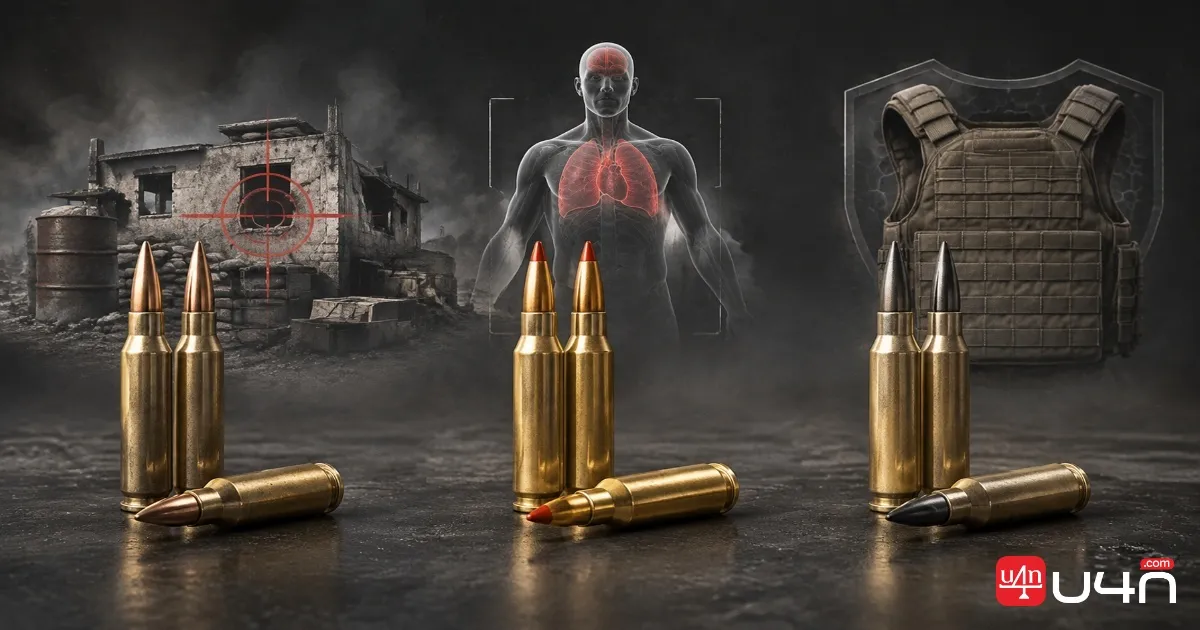
We use the table as a starting point rather than a promise about every gun. A rifle that feels comfortable with FMJ still needs a steady aim with AP. An HP loadout is only useful if we can see and hit the parts of an enemy that are not protected.
Availability also matters. Before buying, we check which rounds are offered for our chosen weapon, whether they are accessible on our account, and what the vendor currently charges. We do not assume that every weapon has the same options or that an older price remains accurate.
The most useful question is not simply, “Does the enemy have armor?” We ask which part of that enemy we are likely to hit. A player behind cover might expose only a helmet, while another crossing a street might expose arms and legs as well as a protected torso.
That distinction changes the value of our magazine. AP suits a plan centered on protected areas. HP asks us to find unprotected ones. FMJ leaves us with a balanced option when we cannot predict the angle. None guarantees a win, but each gives us a better reason to take or avoid a particular shot.
FMJ is where we begin when we are learning a weapon or moving into a fight with limited information. A trip toward the objective can include a close encounter inside a building, a short exchange across a street, and an unexpected target behind a wall. A balanced load keeps us prepared for a mix of targets without asking us to predict every encounter.
For new players, a consistent FMJ setup also makes it easier to recognize what went wrong. If we keep the same weapon and ammunition for several lives, we can pay attention to recoil, sight picture, and positioning. Switching ammunition after every defeat makes those lessons harder to separate.
We also favor a simple load when money is tight. The practical question is not whether FMJ is always the cheapest round in every version. It is whether the complete kit leaves enough cash for another useful deployment. We check the displayed prices and buy enough compatible ammunition for the job, then avoid filling the inventory with gear we cannot afford to replace.
A general-purpose round is less focused on either end of the problem. If we repeatedly face an armored defender who exposes the same protected position, AP deserves consideration. If we have a reliable close angle on unprotected targets, HP can offer a more specialized choice.
We do not switch based on one frustrating exchange. First, we ask whether we landed the shots, whether the target was protected, and whether we had time to finish the engagement. One lost duel does not tell us much about ammunition performance. A repeated pattern gives us a better reason to adjust.
HP, or Hollow Point, is the round we consider when our expected shots are likely to land on unprotected parts of a target. A player crossing an opening or moving out from behind cover can present an opportunity. The key word is opportunity: the angle has to be clear enough for us to hit it consistently.
We are careful about building an entire plan around a tiny target. In a fast doorway fight, a defender's exposed arm can disappear before we settle our aim. If most of the target remains behind cover or armor, the theoretical advantage of HP does not help much. We either wait for a better angle, move with our squad, or accept that another ammunition choice fits the fight more reliably.
HP also asks us to be honest about our own accuracy. We prefer a controlled shot at a visible target over a rushed spray aimed somewhere near an exposed limb. If recoil keeps pulling our shots into armor or cover, we should correct that problem before assuming the rounds are underperforming.
AP, or Armor Piercing, is the specialist choice for encounters where armor is likely to take our hits. We look at it when a defended route repeatedly puts protected heads or torsos in front of us, or when our team expects to push opponents holding a position.
AP is not a universal damage upgrade. Its intended advantage is tied to armor, and its performance against unprotected areas is part of the trade. We also avoid promising that it defeats a specific armor level in a fixed number of shots. That answer requires current, weapon-specific testing rather than a general label.
Our team checks the entire loadout before committing to specialist rounds. If AP is available but buying a full kit leaves us unable to fund the next life, we reduce other costs or return to a simpler setup. A well-placed shot is valuable; a sustainable series of deployments gives us more chances to make one.
Imagine two defenders holding the same building. One is visible behind a window with most of the body covered. The other briefly crosses an open doorway. The first encounter favors a plan for protected areas; the second presents a possible exposed target. We do not need to chase both with the same urgency.
If our magazine does not suit the first angle, we can call the position, hold fire, or move to a better piece of cover with teammates. If the second target appears only for an instant, a speculative burst can cost ammunition without producing a useful hit. We want the shot that our current weapon and magazine can actually support.
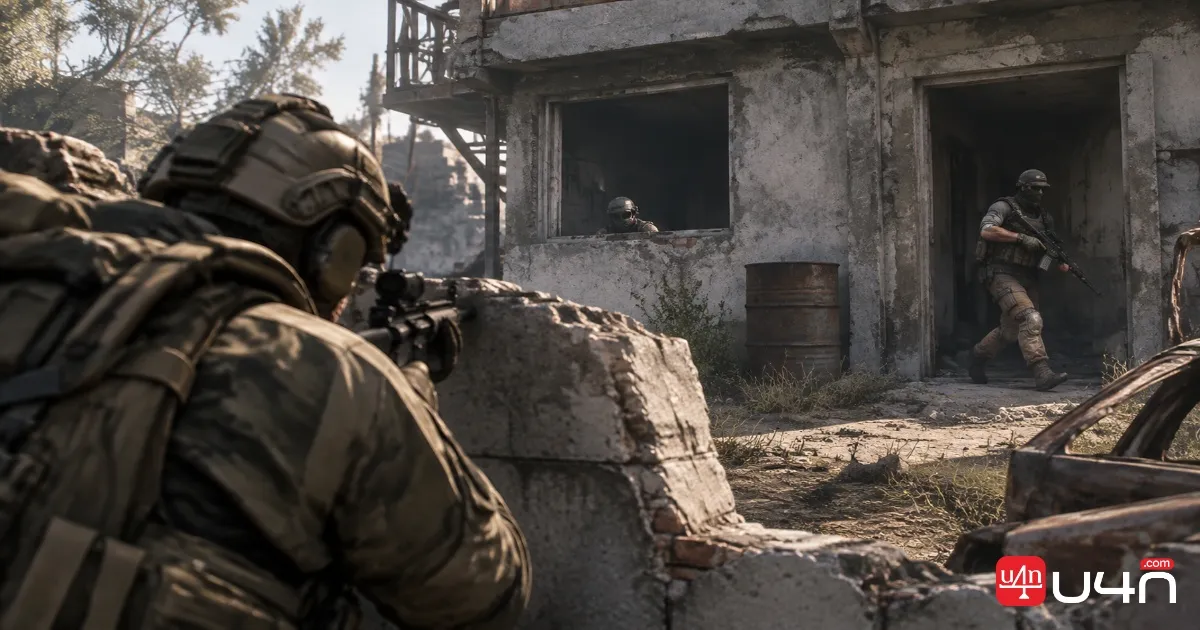
We choose the weapon first, then check the ammunition that fits it. That order sounds obvious, but it prevents a common mistake: collecting attractive rounds or magazines that cannot be used with the weapon in hand. We make the same check when picking up gear after a fight.
| Our planned task | Starting ammunition choice | What we check before deploying |
|---|---|---|
| Learning a weapon | FMJ, if available | Recoil, compatible magazines, and total cost |
| Entering an uncertain objective fight | FMJ as a balanced option | Enough ammunition for a sustained push and retreat |
| Taking clear shots at exposed targets | HP, if available | Whether those angles are realistic and repeatable |
| Attacking a protected position | AP, if available | Access, cost, and support from teammates |
| Recovering from a low balance | Affordable compatible rounds | Whether we can fund another deployment |

These are starting choices, not fixed class rules. A support player can encounter armor, and an assault player can face an exposed target. We adapt to the route and the enemy positions we actually see instead of assuming that a role name settles the ammunition decision.
We prefer to carry one clearly understood load while learning a weapon. Mixing types can be useful when we have a specific plan and can identify the magazines, but it also adds expense and creates room for error. Loading the wrong magazine during a fight is an avoidable problem.
Mode rules can change which equipment appears at the vendor. SHANNENG's Season 3 coverage describes Limited Mode as a restricted mode; we check its current in-game rules rather than assuming a standard-mode loadout is available. If HP or AP is unavailable in the match, the immediate decision is how to use the rounds we can equip.
That means taking fights from better cover, watching our firing lanes, and coordinating with teammates. These habits support every ammunition type, but they become especially valuable when our preferred specialist option is not offered.
The price of a magazine is only part of a deployment. Our weapon, protection, medical equipment, and spare supplies all draw from the same balance. We decide how much we can risk before adding extras, then check the displayed total once the kit is assembled.
If ammunition keeps running out before we reach cover, carrying an appropriate spare can solve a real problem. If we repeatedly die during the first exposed crossing, another magazine probably will not. We change the item or behavior connected to the failure instead of buying more equipment out of frustration.
The training range is useful for learning a weapon's recoil and checking how consistently we can place shots. To compare ammunition, we keep the weapon and conditions as consistent as the available targets allow. Change one variable at a time, record what the game displays, and avoid turning a small test into a claim about every armor type.
A practical comparison starts with FMJ. We fire controlled groups at the same target and distance, then repeat with HP or AP if those rounds are available. We note the ammunition, weapon, target, and current game version. If the range does not let us reproduce a particular armor setup, our test does not establish how that setup behaves in a live match.
In combat, we review the angle as well as the result. Was the enemy behind cover? Did our shots appear to land on a helmet, torso, or exposed limb? Did recoil pull the later shots away? We cannot measure every detail during a hectic exchange, but asking these questions helps us avoid blaming ammunition for a fight we entered from a poor position.
After several similar encounters, we can make a more useful adjustment. Repeated trouble against protected targets gives us a reason to try AP if it is available. Repeated missed shots at exposed limbs suggest aim and positioning need attention before we invest in HP. If the encounters are mixed, FMJ remains a straightforward baseline.
Players comparing Wardogs Accounts should also check the progression and ammunition options available on the account they actually use. Access to a specialist round is useful information for a loadout, but it does not establish that the round fits the next fight or that a purchase is necessary.
We start with FMJ when the expected targets are uncertain. We consider HP when our route gives us dependable shots at unprotected areas, and AP when protected targets are the main obstacle. Before buying, we verify weapon compatibility, current mode restrictions, and the cost of the full kit.
After the fight, we look for a repeatable reason to change. A clear pattern against armor, consistent exposure of unprotected targets, or a budget problem gives us something concrete to act on. A single lost gunfight does not tell the whole story.
No. AP is intended to deal with armor, while FMJ is the balanced option between penetration and flesh damage. We choose according to the target and angle we expect, and we avoid treating AP as an automatic upgrade for every encounter.
HP is most attractive when we can hit an unprotected body part. If cover and armor leave no clear exposed target, we prefer to reposition, coordinate with teammates, or use ammunition better suited to the likely point of impact.
FMJ is a practical starting point when it is available for the chosen weapon. Its balanced profile lets us learn recoil, positioning, and the flow of an objective fight before committing to a more specialized load.
No universal shot count follows from the label alone. The result depends on the weapon, ammunition, armor, hit location, and current game balance. We check current information and avoid applying one weapon's test to every gun.
A mixed load can serve a specific plan if we can identify the magazines and afford them. For a new weapon or a low-budget deployment, one consistent type is easier to manage. We add variety only when we know when and how we intend to use it.
We check the current mode and vendor, choose from the compatible rounds available, and adjust our engagement plan. Better cover, controlled fire, and teammate support remain useful even when a specialist load is unavailable.