
购物车空
继续购物Making money in ROB RUN isn't just about finding the biggest score in Looty Bay. A profitable run depends on what you can carry, how safely you can sell it, and whether you can protect the money before another player takes it away.
The game's economy offers several ways to build your fortune, from searching dumpsters and robbing stores to hauling cargo, running businesses, and collecting settlement taxes. Understanding how ROB RUN Dirty Cash works is just as important as knowing where to find valuable loot, because money you haven't secured can quickly become money you no longer have.
We've looked at the latest economy adjustments and the different income routes available in the game. Our recommendation is to build your income in stages: start with low-cost activities, move into repeatable cargo and robbery runs, and eventually invest in a base that can support a more sustainable business.
Before choosing a farming method, understand the difference between earning money and keeping it. ROB RUN rewards players who manage their cash carefully, not just those who collect the most loot.
Cash carried on your character is convenient, but it comes with risk. Criminals can lose their bag and equipped gear when killed inside Looty Bay, while other dangerous encounters can put carried valuables at risk.
Banked money is a different story. Once you've opened a bank account and moved eligible funds through your base's Laundering Desk, your money is protected from other players until the weekly wipe.
| Money Type | Where It Is Held | Main Risk | Best Use |
|---|---|---|---|
| Loose cash | On your character | Can be stolen or confiscated | Immediate spending |
| Stashed cash | Available cash storage | Depends on the storage system | Managing money between runs |
| Banked money | Bank account | Lost at the server wipe | Protecting accumulated wealth |
| Stolen goods | Inventory or base storage | Can be lost during dangerous encounters or raids | Selling or processing |
| Business income | Generated through base facilities | Depends on property security and operating costs | Long-term progression |

The key takeaway is simple: your real profit is what you successfully secure, not what you briefly carry.
Once you've established a base, the Laundering Desk becomes an important part of your financial routine.
A practical process looks like this:
The Laundering Desk received a major capacity increase in the November 4 update, making it more practical to process larger amounts of cash. For players who regularly complete robberies or cargo runs, that change makes financial management even more important.
New players shouldn't rush into expensive heists. Without reliable equipment, transportation, or a good escape route, a large robbery can quickly turn into a costly failure.
We recommend starting with two activities: dumpster searching and manageable store robberies.
Dumpster farming is one of the simplest ways to collect early resources. You don't need to invest heavily in weapons or prepare a complicated plan before searching the streets.
The November 4 launch update increased the amount of cash found in dumpsters. That makes street exploration more rewarding than it was during the earlier playtest.
Use dumpster runs when:
Don't expect every search to produce a large reward. The value comes from combining searches with a sensible route instead of wasting time crossing the city for every individual container.
Once you're comfortable navigating the city, a small store robbery can provide a more direct source of income.
The goal isn't to collect everything inside the building. It's to complete the robbery, escape, sell your goods, and keep the profit.
| Preparation | What We Recommend | Why It Matters |
|---|---|---|
| Target | Start with a manageable store | Avoid unnecessary difficulty |
| Equipment | Bring only what you can afford to replace | Limit the cost of failure |
| Vehicle | Park with an accessible exit | Reduce escape time |
| Timing | Check nearby police activity | Avoid walking into a response |
| Loot | Take a manageable amount | Don't stay longer than necessary |
| Selling | Use a Fence or Sales Center | Convert loot into cash |
Our biggest tip is to avoid getting greedy. A second trip into the same target may look attractive, but it can expose you to more police attention and other players who have already noticed the robbery.
One completed run is better than a large haul you never manage to sell.

As your equipment and map knowledge improve, you can move beyond basic street activities. Robberies and cargo runs offer more opportunities, but they also require better preparation.
ROB RUN has several types of valuable targets, including cash registers, safes, jewelry, art, and deposit boxes. Their difficulty and preparation requirements vary.
| Target | General Difficulty | What to Consider |
|---|---|---|
| Cash registers | Lower | Useful for learning the robbery loop |
| Safes | Medium | Check the tools and time required |
| Jewelry | Medium to high | Plan for police and player interference |
| Art | High | Prepare your entry and escape |
| Deposit boxes | High | Better suited to players with the right equipment |
These are practical categories rather than guaranteed payout rankings. Actual returns depend on the items collected, selling conditions, and your ability to escape.
Notoriety also matters. Higher Notoriety can improve the value of criminal activity, but it brings additional risk. We wouldn't recommend chasing it before you can consistently complete basic robberies.
Cargo offers a different kind of income route. Instead of repeatedly entering stores, you focus on collecting, transporting, selling, or processing shipments.
The November 4 update made dismantling and selling shipments more profitable, but it also reduced shipment drop rates and increased dismantling time. The November 5 economy patch then revised the value of several cargo types and made opening cargo at your base workbench more profitable than selling it directly.
That creates an important decision:
| Cargo Method | Advantage | Trade-Off |
|---|---|---|
| Sell directly | Faster conversion into cash | May offer less value than processing |
| Open at your base workbench | Better return for certain cargo | Requires facilities and extra time |
| Store for later | Lets you manage when to process or sell | Exposes stored goods to base-related risks |
The best choice depends on the shipment and your current setup. Don't assume that processing every item is automatically worthwhile. Compare the expected value with the time and resources required.
Cargo runs can become expensive when you ignore transportation risks.
Before collecting a valuable shipment:
One detail worth remembering is that cargo handling and combat don't always mix well. If you're carrying a shipment, avoid unnecessary fights that could interrupt the run or leave your goods exposed.
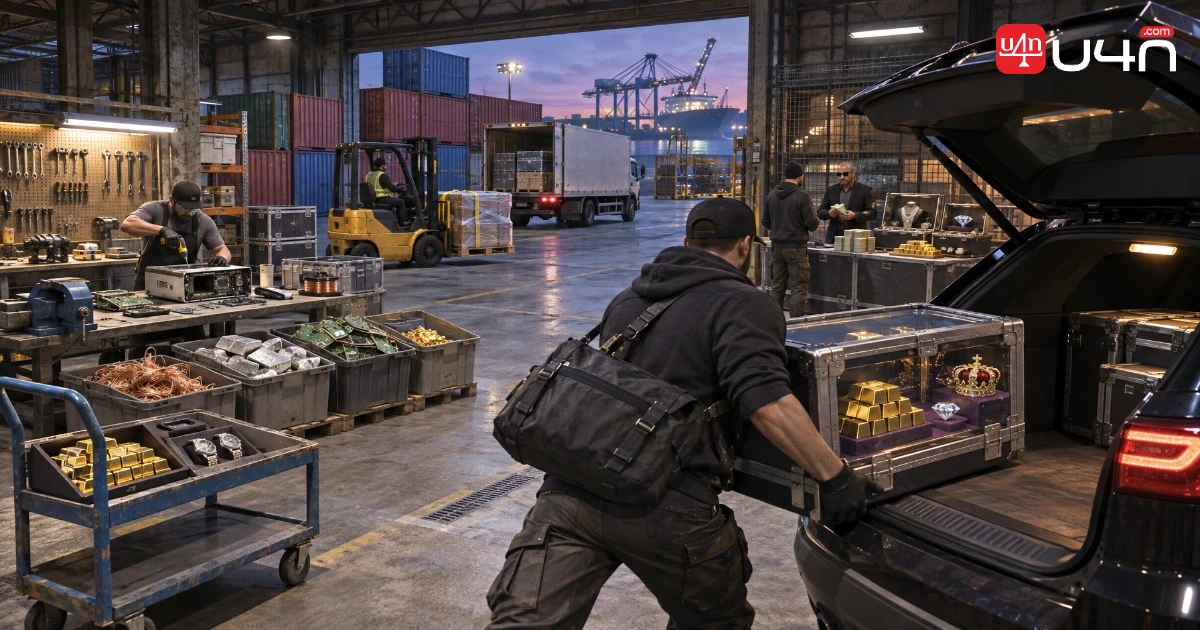
Robberies provide immediate opportunities, but they depend on successful runs. A base gives you another way to approach the economy by producing and processing goods.
The November 4 update significantly increased profits from base businesses, including farms, laboratories, and contraband activities. That makes property progression more attractive for players who want to move beyond street-level farming.
Different facilities serve different purposes. Your choice should depend on what resources you can obtain and how much time you're willing to spend managing production.
| Facility | Main Role | What to Consider |
|---|---|---|
| Farm | Produces valuable plants | Supply requirements and security |
| Laboratory | Processes chemical resources | Input materials and production time |
| Contraband facilities | Support higher-value goods | Processing requirements and risk |
| Cargo workbench | Opens and processes shipments | Shipment availability and time |
| Warehouse | Stores valuable goods | Capacity and vulnerability to raids |
Don't build every facility as soon as you get a plot. Start with the production options you can realistically supply and maintain.
A base changes your progression because it gives you somewhere to store goods and organize production.
Instead of relying entirely on individual robberies, you can:
However, a base isn't completely safe. Other players can attempt raids, so storage and defense should be part of your investment plan.
We recommend building a functional property first and expanding gradually. An affordable base that supports your income is better than an expensive setup that leaves you without operating cash.
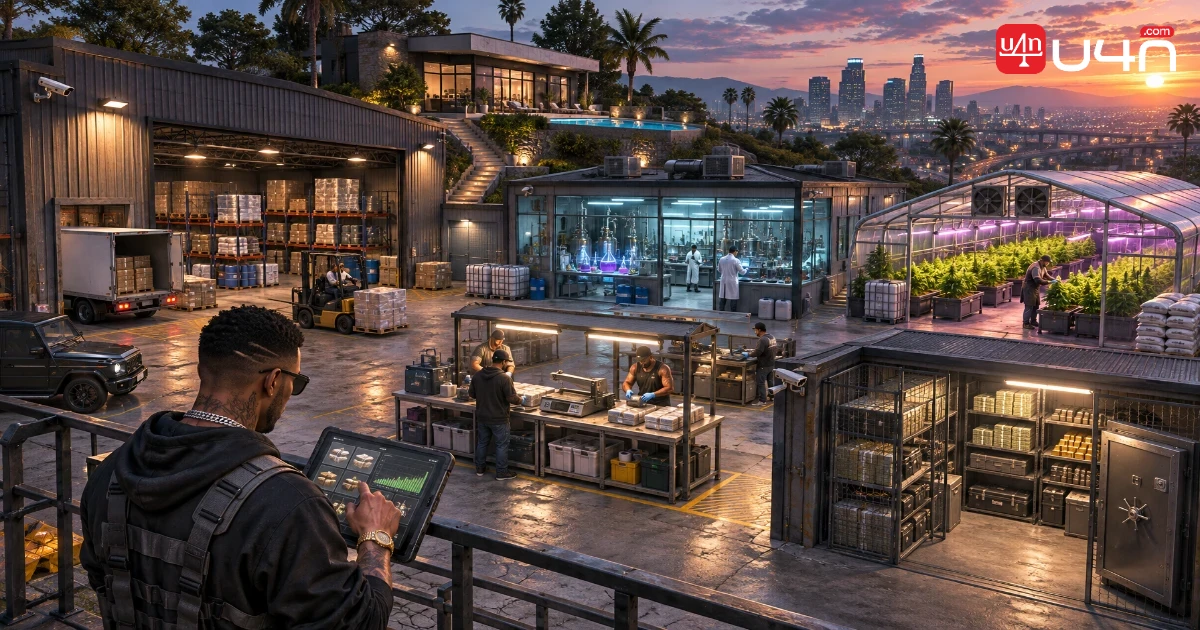
Once you've developed your basic income routes, there are other ways to earn money that don't rely entirely on ordinary robberies.
Some items may contribute to collections, making them more valuable as part of a set than as individual sale items.
Before selling an unusual or rare item, check whether it is needed for a collection you're working toward. This is especially useful if you regularly loot different locations and have room to store items.
The important distinction is between an item you can sell immediately and an item that may help you complete a more valuable objective later.
Playing as a police officer provides a different way to earn money.
Police salaries and rewards are connected to their work, including arrests and confiscated goods. The November 5 update adjusted police salaries and the composition of their rewards, so the role's economy is also part of the game's ongoing balance changes.
Police work won't replace every criminal income route, but it can be worth considering if you prefer a different style of gameplay and want to learn how the other side of Looty Bay operates.
Settlement ownership introduces a more advanced source of income.
Settlement owners can collect taxes from certain transactions made by residents. The November 5 update increased the tax received by owners of Level 2 and Level 3 settlements.
Clans can also compete for district control and gain access to a larger share of the wider economic system.
This is not a realistic first-day farming method. You'll need substantial progression and the resources to acquire or control the relevant territory.
For most players, settlement taxes are a long-term objective rather than a replacement for early cash farming.
There is no single method that works best for every ROB RUN player. Your equipment, property, server activity, and available time all affect which route makes sense.
Here's how we'd approach the economy at different stages.
Your first priority is building a reserve without risking everything.
| Priority | Activity | Goal |
|---|---|---|
| 1 | Search dumpsters | Collect starting cash and useful items |
| 2 | Explore selling locations | Learn where to convert loot |
| 3 | Complete a small robbery | Build your first active income |
| 4 | Secure your earnings | Avoid losing accumulated cash |
| 5 | Upgrade basic equipment | Prepare for more demanding activities |
Don't spend your entire reserve on a weapon or vehicle. You need enough money to recover if a run goes badly.
Once you have a reliable vehicle and basic equipment, combine different income sources instead of repeating the same activity all session.
A practical routine is:
This approach gives you more flexibility. If a robbery location becomes dangerous, you can switch to another activity rather than forcing a bad encounter.
For established players, the focus shifts from collecting individual payouts to making assets generate value.
Consider these priorities:
ROB RUN uses a seven-day server cycle, so timing matters. A major investment should have enough time to generate value before the next wipe.
Even a profitable route can become inefficient if you make the wrong decisions around it.
The smartest ROB RUN money-making strategy is to build your income one stage at a time. Start with low-cost activities, expand into higher-value opportunities, and protect the profits you make along the way.
The smartest ROB RUN money-making strategy is to build your income one stage at a time. Start with dumpsters and manageable robberies, move into cargo when you have the equipment to transport it, and develop base businesses when you can afford to support them.
Just as importantly, protect what you earn. A large bag of loot means very little if you lose it before selling, and a profitable business won't help if you spend more on upgrades than it can reasonably return.
Once your basic income routine is stable, you can decide whether to expand your property, compete for settlement control, or explore additional progression options. Players looking for help with that next step can also review ROB RUN Boosting as a separate progression-support option.
In Looty Bay, making money is only half the game. Knowing how to keep it is what separates a short-lived score from a growing criminal empire.