购物车空
继续购物The ZLR Talonhawk brings a different kind of combat experience to Call of Duty: Modern Warfare 4. Unlike traditional firearms, this combat axe is built around close-range attacks, careful positioning, and well-timed engagements. It rewards players who understand map layouts and know when to push rather than simply running toward every enemy. In this guide, our team looks at how the weapon works, how to unlock it, and how to build a class that makes its melee-focused playstyle more effective.
As an in-season event reward, the ZLR Talonhawk gives players another reason to explore MW4's close-quarters combat. Its 10 weapon levels and Mastery Badges also provide a progression goal beyond simply getting eliminations. While preparing for different DMZ deployments, players may also want to manage resources such as Modern Warfare 4 DMZ Cash, but the best way to get value from this weapon is to focus on movement, positioning, and smart engagements.
The ZLR Talonhawk is a dedicated melee weapon designed for players who prefer direct, close-range engagements. Its combat identity is straightforward: get within striking distance, choose the right moment, and use its heavy blade to eliminate opponents. This makes it very different from a conventional primary weapon, where accuracy, ammunition capacity, and recoil control usually determine performance.
The confirmed weapon information gives us a useful starting point for understanding its progression and customization options.
| Weapon Detail | Information |
|---|---|
| Weapon Name | ZLR Talonhawk |
| Game | Call of Duty: Modern Warfare 4 |
| Weapon Class | Melee |
| Weapon Type | Combat Axe |
| Release Window | Season 1, In-Season |
| Weapon Levels | 10 |
| Mastery Badges | Yes |
| Unlock Method | In-Season Event |
| Attachment Types | None |
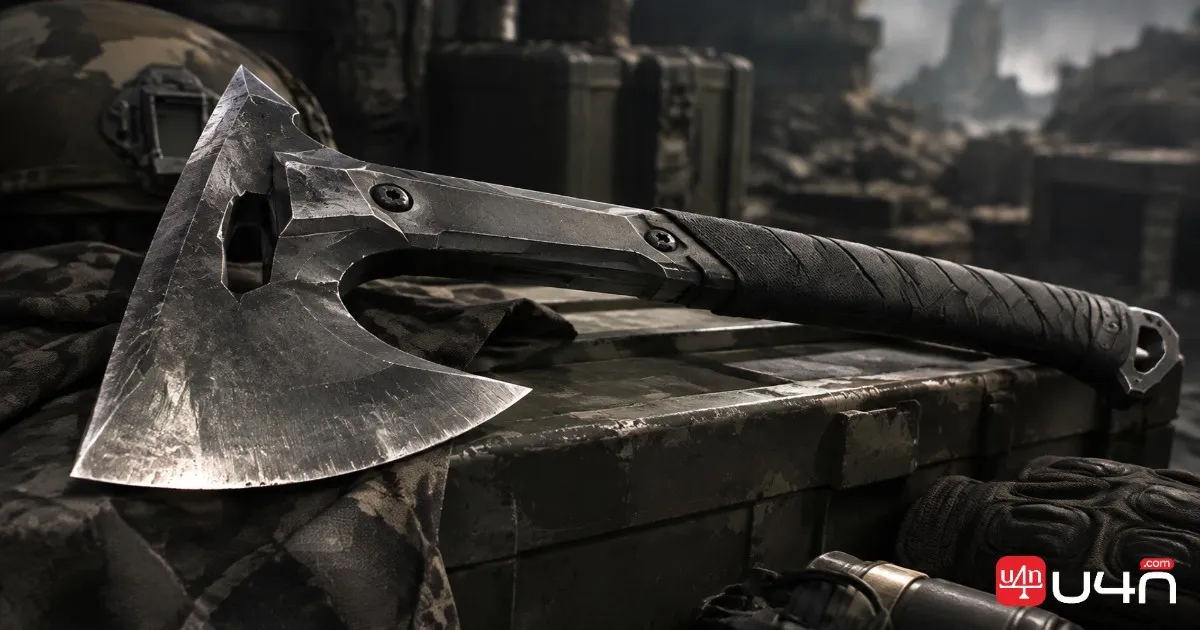
The weapon does not use traditional Gunsmith attachments. Instead, its progression revolves around weapon levels and Mastery Badges. We recommend checking the in-game weapon menu after unlocking it, as that is where players can verify available progression objectives and rewards.
The biggest advantage of a melee weapon is that it does not require ammunition management. You can concentrate on movement and engagement timing rather than tracking magazine capacity or planning reloads. The Talonhawk's heavy combat-axe identity also makes it an appealing choice for players who enjoy a more aggressive and unconventional approach.
However, its limitations are just as important. You must get close enough to attack, which can leave you exposed to opponents using rifles, SMGs, or shotguns. Open sightlines and long-range engagements are particularly difficult situations for a melee-focused loadout.
Our take: The Talonhawk is best treated as a specialized close-range option, not a weapon that can replace reliable ranged firepower in every situation.
The ZLR Talonhawk is listed as an in-season event reward in the official Season 1 weapon information. This means players should look for its corresponding event rather than expecting to unlock it through a standard Battle Pass weapon tier.
When the event becomes available, open the Events section in the game and locate the reward track associated with the Talonhawk. Read the listed objectives carefully before starting. Event challenges may involve different modes or match activities, so understanding the requirements first can save time.
We recommend checking these details:
The official announcement confirms the event-based unlock method, but players should rely on the live event description for the final challenge requirements and availability dates.

The weapon is identified as an event reward, but players should check the event's own reward conditions before assuming that every requirement is free or available without restrictions. The most reliable approach is to inspect the in-game event page when the reward becomes active.
Because the Talonhawk has no conventional attachment slots, building an effective class is more important than searching for a traditional weapon build. Your secondary weapon, perks, and equipment should cover the situations where a melee attack is too risky.
A reliable ranged secondary gives you a way to handle enemies before they enter melee distance. We would prioritize a weapon that feels comfortable to use while moving and can provide dependable backup when a direct approach is not practical.
| Secondary Weapon Type | Best Use | Why It Works |
|---|---|---|
| Fast-Handling SMG | Close-to-mid-range fights | Provides backup when enemies are outside melee distance |
| Assault Rifle | Flexible engagements | Offers more reliable coverage across different sightlines |
| High-Damage Pistol | Quick emergency defense | Allows a fast response when switching weapons is necessary |
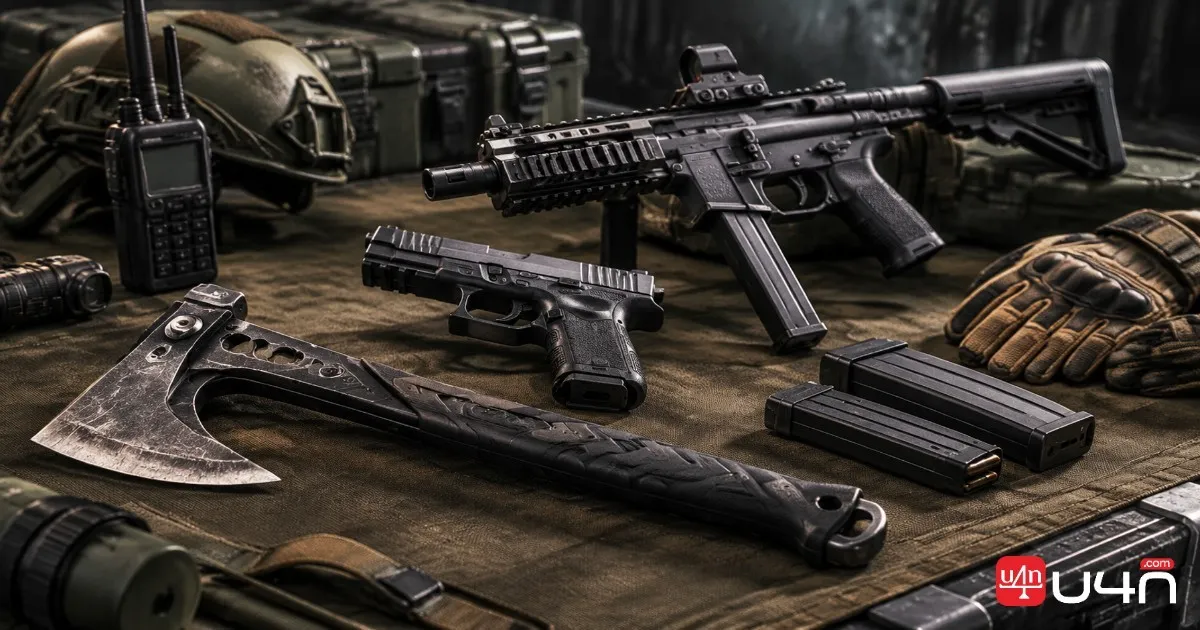
Your choice should reflect the maps and modes you play most often. An SMG is a natural fit for compact maps, while an assault rifle gives you more flexibility when the battlefield has longer sightlines.
Instead of relying on a single fixed setup, choose perks and equipment that support the way you approach enemies.
The exact perk and equipment names should be checked against the current MW4 loadout menu, since available options and balance can change between updates.
For an aggressive setup, prioritize movement and tools that help you approach enemies without taking unnecessary damage. If you prefer a more patient style, use your secondary weapon to control open areas and save the Talonhawk for enemies who move into confined spaces.
We generally recommend keeping two class variations: one for compact maps and another for larger maps. This makes it easier to adapt without rebuilding your entire loadout before every match.
Using the Talonhawk well is less about rushing and more about controlling the distance between you and your opponent. A failed approach can leave you exposed, while a well-timed flank can create a much better opportunity for a melee attack.
Avoid crossing open areas simply because an enemy is visible. Instead, move between buildings, walls, vehicles, and other solid cover. These routes reduce the time you spend exposed and make your approach less predictable.
Indoor areas are especially useful because they limit the number of directions from which opponents can attack. Narrow corridors, doorways, and connected rooms can create opportunities to get close without exposing yourself to several sightlines at once.
Timing is one of the most important parts of melee combat. An opponent who is watching your approach can usually react before you get within striking distance. Look for moments when enemies are distracted, repositioning, or focused on another teammate.
A few practical habits can improve your results:
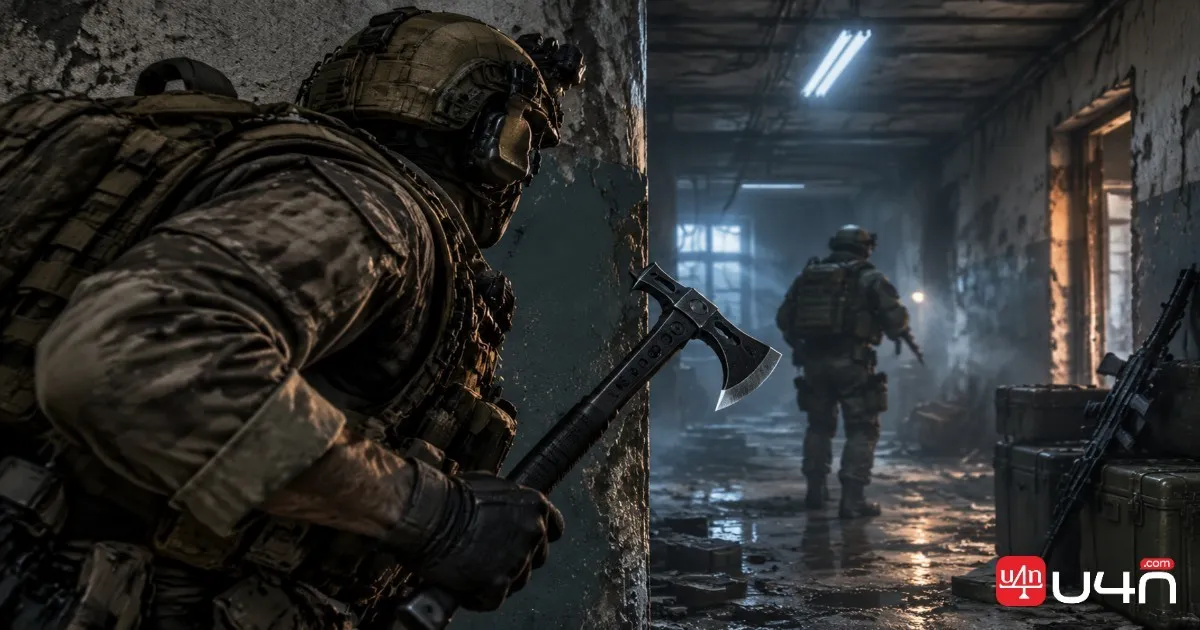
Small maps and indoor environments generally provide more opportunities for close-range encounters. Objective areas can also create openings when opponents are focused on defending a position or fighting your teammates.
On larger maps, the weapon requires more patience. Use your ranged secondary to cover exposed sections, then switch to the Talonhawk when the fight moves into a suitable area. We would avoid forcing melee engagements across long, open sightlines.
The Talonhawk has 10 weapon levels and supports Mastery Badges. This gives players a separate progression path to work toward after unlocking the weapon.
The most practical way to progress is to use the weapon in situations where melee engagements are realistic. Choosing compact maps, learning common enemy routes, and playing around objectives can create more opportunities to use it.
Our recommended approach is to:
The exact XP requirements and progression conditions should be checked in the weapon menu. Do not assume that another melee weapon has identical leveling requirements.
Mastery Badges provide an additional progression goal for players who want to demonstrate their experience with the weapon. Check the in-game mastery section to see the available objectives, completion status, and rewards.
If you are working toward mastery, focus on improving your consistency rather than chasing every encounter. A controlled approach usually produces better results than repeatedly rushing into unfavorable fights.
The ZLR Talonhawk offers a distinct melee-focused playstyle in Modern Warfare 4. Its combat-axe design, 10 weapon levels, and Mastery Badges make it worth exploring for players who enjoy close-range challenges. However, it is not a universal replacement for a firearm. Its effectiveness depends on map knowledge, movement, timing, and a secondary weapon that can handle situations where melee combat is not practical.
Our recommendation is to build your class around mobility and reliable backup firepower, then use cover and flanking routes to create better attack opportunities.
If you also play DMZ, reviewing available Modern Warfare 4 DMZ Items for sale may help you compare resource options, but your Talonhawk performance will ultimately come down to how well you read engagements and manage distance.
The ZLR Talonhawk is listed as an in-season event reward. Check the active event page in MW4 for the exact objectives, availability period, and reward requirements.
Yes. It is classified as a melee weapon and uses a combat-axe design for close-range attacks.
The weapon has 10 levels. Players can track its progression through the in-game weapon menu.
No traditional attachment types are listed for the Talonhawk. Its progression is centered on weapon levels and Mastery Badges rather than Gunsmith customization.
Yes. The official weapon information confirms Mastery Badges. Check the in-game mastery section for the current objectives and rewards.
It can be effective in close-quarters situations, especially when you use cover, flank routes, and good timing. It is less suitable for open areas where opponents can engage you from a distance.
Check the in-game weapon availability for DMZ before planning a loadout around it. A weapon's appearance in the overall Season 1 content announcement does not automatically confirm that it is usable in every mode.