购物车空
继续购物The latest Finest Series cards are making their way into MLB The Show 26 Diamond Dynasty, and they are already attracting attention in Ranked Seasons. Fernando Tatis Jr., Juan Soto, Pete Crow-Armstrong, and several other notable players are bringing new options to competitive lineups. But collecting these cards is only part of the equation. Their actual value depends on how well they perform at the plate, in the field, and under online competitive conditions.
In our latest Ranked Seasons gameplay, we tested a lineup built around several new Finest cards, including an expensive Juan Soto acquisition. We also looked at more accessible options from the Finest Program and Exchange system. For players comparing available MLB The Show 26 Players, this is a useful opportunity to consider both on-field performance and the resources required to build a competitive Diamond Dynasty roster.
Several players stood out during the lineup-building process. Rather than focusing only on their overall ratings, we should consider how each card fits into a competitive roster.
| Player | How We Acquired the Card | Potential Lineup Role |
|---|---|---|
| Fernando Tatis Jr. | Finest Pack | Versatile offensive and defensive option |
| Juan Soto | Marketplace | Middle-of-the-order power hitter |
| Pete Crow-Armstrong | Finest Program | Speed and outfield coverage |
| Yandy Díaz | Exchange | Contact-oriented offensive option |
| Rafael Devers | Existing lineup card | Power-focused run producer |
Fernando Tatis Jr. was one of the first cards added to the roster. We obtained him from a Finest Pack, which reportedly cost around 50,000 Stubs. The pack offered several player choices, including Tatis Jr. and Shohei Ohtani. Although Ohtani was initially appealing, Tatis Jr. felt like the more comfortable choice based on our hitting experience.
Juan Soto was a much bigger investment. We found his card on the Marketplace and spent approximately 490,000 Stubs to bring him into the lineup.
Pete Crow-Armstrong is another interesting addition, particularly for players who prefer earning cards through gameplay instead of spending heavily on the Marketplace. His card was obtained through the Finest Program, making him one of the more accessible options in this lineup.
Yandy Díaz also joined the roster through the Exchange system, while Rafael Devers provided another source of offensive power.

The gameplay highlights several ways to expand a Finest collection. Each method requires a different balance of time, existing cards, and Stubs.
| Acquisition Method | Example from the Gameplay | Main Consideration |
|---|---|---|
| Finest Pack | Fernando Tatis Jr. | Requires Stubs and involves player selection |
| Finest Program | Pete Crow-Armstrong | Rewards can be earned through missions |
| Marketplace | Juan Soto | Direct acquisition with a substantial Stubs investment |
| Exchange | Yandy Díaz | Uses existing cards as exchange resources |
The Finest Program is particularly worth considering for players who do not want to spend hundreds of thousands of Stubs on individual cards.
In our experience, the program was relatively straightforward. Most of the required missions were simple, and several statistical objectives could be completed in offline games against the CPU.
The entire process took approximately 45 minutes to one hour. This is a useful time investment if you want to add more Finest cards without relying on Marketplace purchases.
The Marketplace provides a more direct route when you have a particular player in mind. Juan Soto is the clearest example from this lineup.
However, spending approximately 490,000 Stubs on one card is a major commitment. Before making a similar purchase, consider whether the player fills a position you actually need and whether a program or exchange reward could provide comparable lineup value.
We also used the Exchange system to obtain Yandy Díaz.
Instead of keeping every duplicate, selling or exchanging cards can help convert an unused collection into more useful roster additions. The important point is to check the value of each card before exchanging it, especially when the same card could be worth more on the Marketplace.
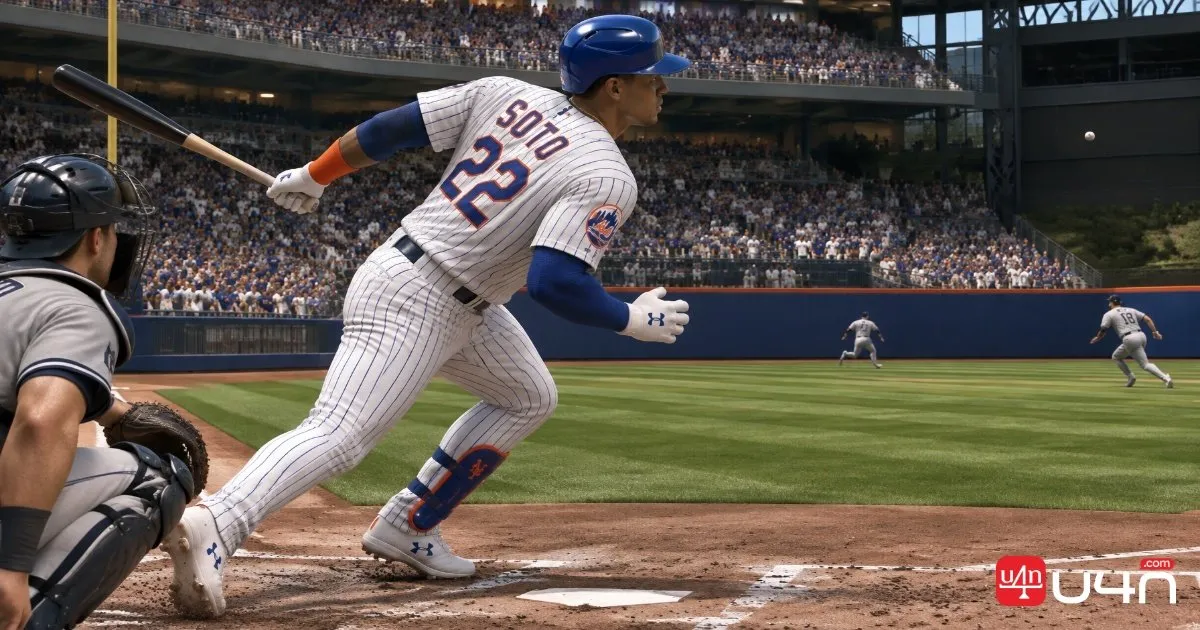
A card's real value becomes clearer once it enters an online game. Our Ranked Seasons debut took place at Coors Field, with Tatis Jr. leading off and Soto batting fourth.
The matchup provided several useful examples of how the new lineup performed.
Soto made an excellent first impression. In his first plate appearance, he connected with the pitch and drove the ball into the gap for a double.
That hit immediately put pressure on the opposing defense. Yandy Díaz followed with a strong hit, moving the runners into scoring position. Soto's baserunning was not particularly fast, but the quality of the contact gave him enough time to advance.
We then used a ground-ball approach with Matt Olson to bring Soto home, giving Team Rally Prizes an early 1-0 lead.
This sequence highlights an important point: a middle-of-the-order hitter does not need to produce a home run every time. Consistent contact and the ability to reach scoring position can create opportunities for the rest of the lineup.
Rafael Devers supplied one of the biggest offensive moments of the game with a three-run home run.
Power hitters are especially valuable when runners are already on base. Instead of relying on multiple hits to manufacture runs, one well-timed swing can change the scoreboard immediately.
Devers' home run demonstrated the kind of offensive impact we want from a power-focused middle-order hitter.

Tatis Jr. led off, but his performance was less consistent than Soto's early contribution. His opening plate appearance ended with a flyout after a late swing and contact below the ideal hitting zone.
That does not necessarily indicate a problem with the card. Online hitting requires better timing and PCI placement than many offline matchups, especially when facing faster pitches.
Crow-Armstrong also appeared in the lineup as a program reward. His value should be evaluated through his speed, defensive coverage, and ability to create pressure on the bases rather than judging him solely by one plate appearance.
Overall, the game showed that different Finest cards can contribute in different ways. Some provide immediate power, while others offer lineup flexibility and defensive value.
Adding high-rated cards does not automatically create a strong Ranked Seasons team. Position assignments, batting order, and player roles still matter.
Based on the lineup used in the gameplay, we would approach the roster as follows:
| Lineup Role | Suggested Player | Strategic Purpose |
|---|---|---|
| Leadoff | Fernando Tatis Jr. | Start innings and create offensive opportunities |
| Speed-oriented slot | Pete Crow-Armstrong | Add baserunning and outfield value |
| Middle of the order | Juan Soto | Generate consistent offensive pressure |
| Power slot | Rafael Devers | Convert baserunners into runs |
| Contact option | Yandy Díaz | Support rallies and extend innings |
| First base | Matt Olson | Provide another offensive option |
This is a practical role-based outline rather than a confirmed optimal lineup. The final batting order should depend on each card's actual attributes, handedness, hitting tendencies, and your own PCI performance.
We should also avoid overlooking the defensive side. A player who offers excellent hitting but creates a weakness at a premium defensive position may not always be the best overall roster choice.
For Ranked Seasons, consistency is generally more useful than collecting expensive cards simply because they have strong reputations.

Juan Soto's approximately 490,000-Stubs purchase raises an important question: how much should we spend on a single Finest card?
The answer depends on your current roster, available resources, and ability to use the player effectively.
Consider three factors before committing to a major purchase:
Our account had more than 600,000 Stubs available before purchasing Soto. That made the investment possible without completely exhausting the available balance.
However, this approach will not suit every player. If your roster still has multiple weak positions, spreading your resources across several upgrades may provide more value than spending nearly half a million Stubs on one hitter.
We also recommend keeping an eye on the Marketplace rather than assuming that a high-priced card will remain at the same value. Prices can change as more players enter the market and new reward opportunities become available.
Our main recommendation is to prioritize cards that improve specific weaknesses in your existing roster. A high-priced Finest card is only worth the investment when it provides a meaningful upgrade to your lineup.
For players looking to expand their collections or prepare for future roster upgrades, managing MLB The Show 26 Stubs carefully is just as important as choosing the right Finest cards.
The new Finest Series offers several useful roster options, but each card serves a different purpose.
Juan Soto delivered the strongest immediate offensive highlight in our Ranked Seasons debut, while Rafael Devers demonstrated the value of power hitting with a three-run home run. Tatis Jr. offers another prominent lineup option, and Crow-Armstrong provides an alternative for players who prefer earning rewards through the Finest Program.
Our main recommendation is to prioritize cards that improve specific weaknesses in your existing roster. Free program rewards should be considered before committing large amounts of Stubs, while Marketplace purchases make more sense when a particular player offers a clear upgrade.
Ultimately, a competitive Diamond Dynasty lineup is built through a combination of player quality, roster balance, and consistent execution at the plate.
The lineup featured Fernando Tatis Jr., Juan Soto, Pete Crow-Armstrong, Yandy Díaz, and Rafael Devers. Matt Olson and other players also contributed to the team's offense.
The player spent approximately 490,000 Stubs to purchase Juan Soto through the Marketplace. This was the reported purchase price in the gameplay, not a guaranteed current market value.
Pete Crow-Armstrong was obtained through the Finest Program. The recorded experience suggests that many missions can be completed offline against the CPU, with the full process taking approximately 45 minutes to one hour.
Based on the gameplay experience, the program was relatively accessible. Most missions were straightforward, and offline CPU games helped complete several statistical objectives.
Soto delivered an immediate double and helped create an early scoring opportunity. However, whether he is worth approximately 490,000 Stubs depends on your roster needs, hitting performance, and available budget.
Packs offer a chance to obtain desirable cards through a player selection, while the Marketplace allows you to target a specific player. If you need one particular card and have enough resources, direct Marketplace purchases offer more control. If you are building a collection, compare pack costs with the value of their available choices before spending.