
购物车空
继续购物Choosing a class in MapleStory Classic World is about more than picking a weapon or finding the biggest damage numbers. Each branch approaches combat differently, from the Warrior's close-range pressure to the Magician's elemental attacks, the Archer's distance control, and the Thief's mobility. Our team looks at how these differences translate into actual gameplay, which defining skills matter most, and what you should understand before committing to a job path. Your early decisions also affect how you approach leveling, equipment upgrades, and managing MapleStory Classic World Mesos.
This guide focuses on the mechanics that define each class rather than listing every skill individually. The third-job abilities discussed below come from closed-test gameplay and should not automatically be treated as confirmed features of the current public build. Nexon has explicitly warned that closed-test content and balance are subject to change. Official test announcement.

Before choosing a second-job specialization, we recommend understanding how each first-job class handles movement, damage, and survival. These fundamentals influence almost every encounter during early leveling.
| Class | Primary stat | Combat style | Main consideration |
|---|---|---|---|
| Warrior | Strength (STR) | Close-range physical combat | High durability, but limited attack distance |
| Magician | Intelligence (INT) | Ranged magical attacks | MP management, elemental damage, and teleportation |
| Archer | Dexterity (DEX) | Ranged physical combat | Positioning, ammunition, and keeping enemies at a distance |
| Thief | Luck (LUK) | Ranged or melee combat, depending on the branch | Mobility, evasion, and specialized attack patterns |
Warriors are built for players who prefer fighting enemies at close range. Their higher HP and defense help them withstand contact damage, but their limited reach makes positioning important. Power Strike handles single targets, while Slash Blast attacks multiple nearby monsters.
Warriors can also jump-attack, which gives them more flexibility when moving through crowded maps. However, mobility alone does not eliminate the need to manage enemy spacing. We recommend learning when to approach, attack, and reposition instead of relying on durability to absorb every hit.
Magicians attack with spells rather than conventional weapon strikes. Their high MP pool and Magic Guard help compensate for their weaker physical defenses by redirecting much of the damage they receive toward MP.
Their second-job access to Teleport changes how they move through a map. Instead of relying entirely on walking and jumping, they can reposition horizontally or vertically to reach enemies and avoid unnecessary contact. For players who enjoy ranged combat and managing magical resources, this is a defining advantage.
Archers rely on bows or crossbows and perform best when they can attack before monsters reach them. Arrow Blow provides a straightforward single-target option, while Double Shot can hit a target multiple times or distribute hits across nearby enemies, depending on the situation.
Power Knockback helps create space when monsters get too close. The trade-off is that Archers have less room for positioning mistakes than Warriors. Maintaining a useful firing distance is part of their damage strategy, not simply a defensive habit.
Thieves split into two very different branches: the ranged, throwing-star Assassin and the melee-oriented Bandit. Both benefit from mobility and evasion, but they approach combat at different distances.
Lucky Seven gives Assassins a ranged attack, while Double Stab provides Bandits with a close-range alternative. Dark Sight adds another layer of utility by allowing a Thief to avoid ordinary monster contact damage while the skill is active.
If you want a fast-moving character, the Thief is worth considering. However, its branches demand different positioning habits, so the choice between ranged and melee combat matters more than the class label alone.
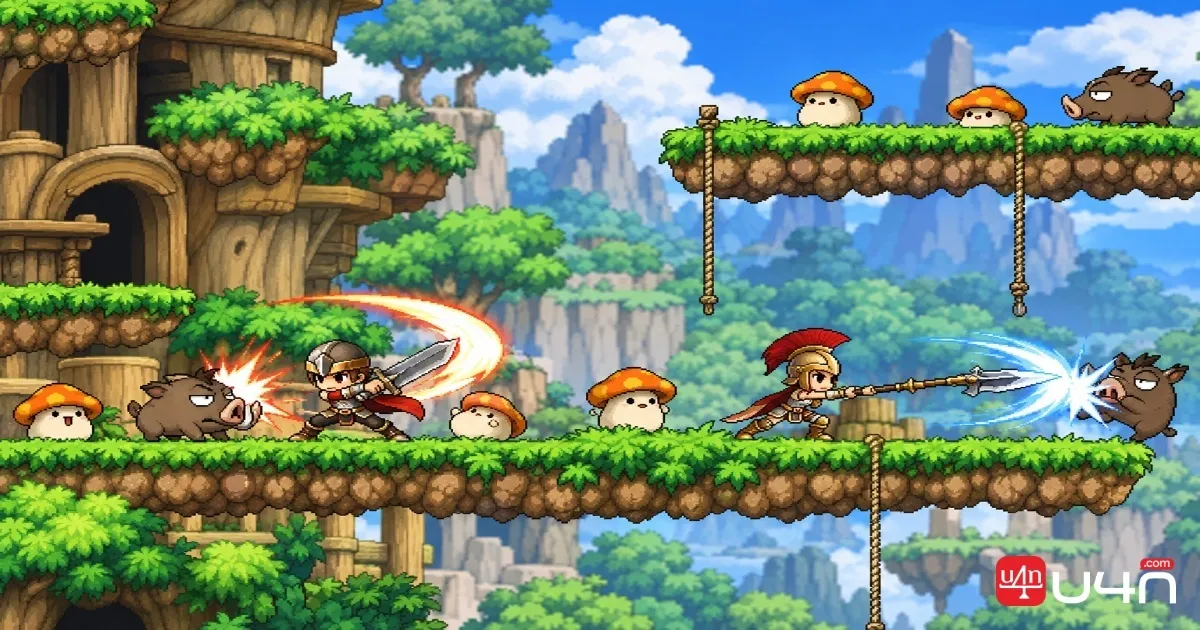
Warrior specialization is primarily about weapon preference and the kind of combat utility you want. All three second-job branches retain the fundamentals of Warrior combat, but their later skills push them in different directions.
Fighters use swords or axes. Swords generally favor attack speed, while axes offer their own damage characteristics and may provide bleeding effects, depending on the applicable version. One-handed weapons can be paired with shields for additional defense, whereas two-handed weapons emphasize a different balance of reach and attack performance.
Rage is a defining Fighter skill because it increases the attack power of the user and nearby party members. Weapon Booster improves attack speed, while Final Attack can trigger an additional strike after eligible attacks.
In the closed-test third-job kit, Crusaders build Combo Attack orbs through their regular attacks. Panic consumes the accumulated resource for single-target damage, while Coma provides an area attack. The decision is not simply which skill hits harder: spending the orbs creates a resource cycle that players must rebuild before repeating the same burst.
Best fit: Players who enjoy direct melee combat and managing a build-up-and-release damage pattern.
Pages use swords or blunt weapons, trading the characteristics of each weapon type against personal preference and equipment availability. Threaten adds a defensive utility layer by reducing nearby monsters' movement speed and weapon defense.
White Knight, as represented in the closed-test material, introduces fire, ice, and lightning charges. These allow the player to adapt attacks to the elemental weaknesses of different monsters. Charged Blow provides a stronger multi-target option than the basic Slash Blast, with its interaction with elemental charges depending on the skill's current implementation.
The appeal of this branch is flexibility. Instead of approaching every monster with the same damage profile, players can adjust their elemental approach to the encounter.
Best fit: Players who prefer melee combat but want elemental options and additional control over how they approach different monster types.
Spearmen use spears or polearms, both of which are two-handed weapons. The weapon choice affects the feel of combat, with different attack patterns and movement considerations.
Iron Will improves defense and can help prevent knockback, supporting the branch's durable playstyle. In the closed-test Dragon Knight kit, Piercing Crusher attacks multiple enemies with a thrusting motion, while Dragon Fury uses a sweeping attack pattern.
Dragon Roar offers a large-area attack but comes with an HP cost and a stun drawback in the described test build. Dragon Blood increases damage while draining HP, making health management central to the branch's identity. Hyper Body adds party utility by increasing maximum HP.
Best fit: Players who want a durable melee character with broad attacks, health-management mechanics, and a useful party buff.
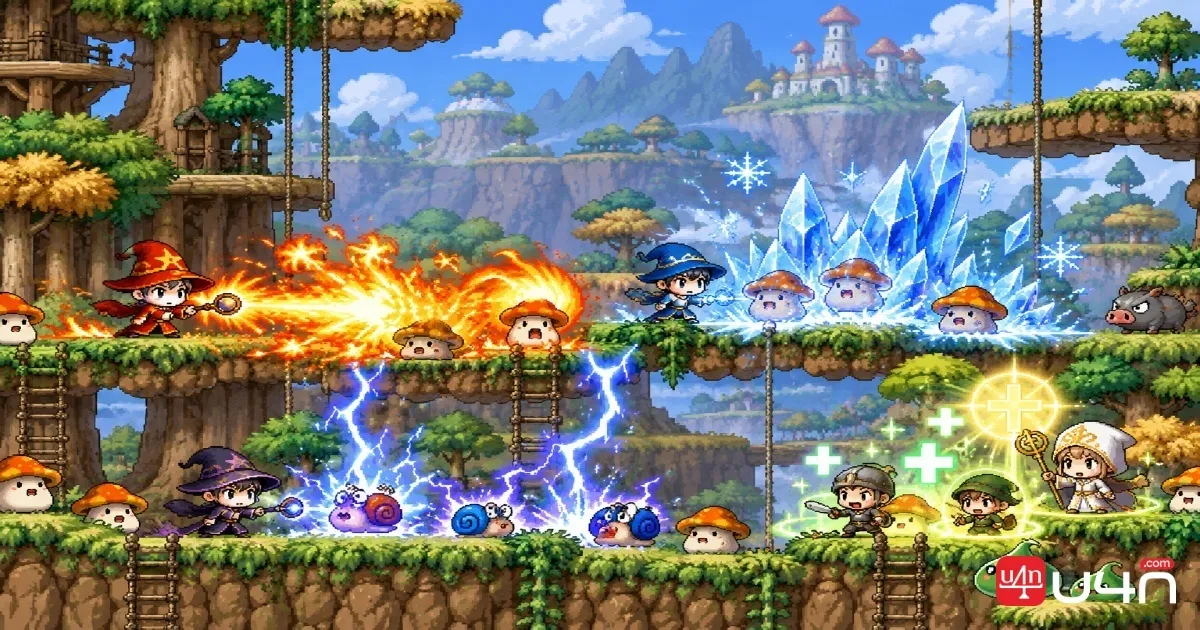
Magicians share two important tools: Magic Guard for damage mitigation and Teleport for movement. Their second-job choice determines whether they specialize in elemental offense or healing and support.
Fire/Poison Wizards combine direct damage with damage-over-time effects. Fire Arrow provides single-target fire damage and burning, while Poison Breath spreads poison across multiple enemies.
The closed-test Fire/Poison Mage kit expands that approach with Poison Mist, which creates an area of lingering poison, and Explosion, which can capitalize on poisoned targets for additional damage. Elemental Composition adds another option for attacking a single target based on its elemental weaknesses.
The key mechanic is the relationship between applying a status effect and exploiting it. Poison is not just extra damage ticking in the background; it can become part of a larger attack sequence.
Best fit: Players who enjoy damage-over-time effects, elemental interactions, and planning attacks around enemy status conditions.
Ice/Lightning Wizards trade the Fire/Poison branch's damage-over-time focus for elemental control and area damage. Cold Beam deals ice damage and slows a target, while Thunderbolt attacks multiple nearby enemies with lightning.
In the closed-test third-job kit, Ice Strike adds another area attack with a slowing effect, while Thunder Spear offers a different lightning-based attack pattern. Elemental Composition provides a single-target option that adapts to elemental weaknesses.
For practical leveling, the combination of slowing enemies and attacking groups can help reduce the pressure of close encounters. The value of that control depends on monster behavior and the specific version of each skill.
Best fit: Players who prefer ranged spellcasting, crowd control, and switching between ice and lightning attacks.
Clerics are the most support-oriented Magician branch in this overview, but they are not limited to healing. Heal restores HP to the user and party members, and it can damage undead monsters. Holy Arrow provides a dedicated holy-damage attack, while Bless improves party attributes and enhances healing in the described kit.
The Priest skills shown in the closed-test material add Shining Ray for area holy damage, Dispel for removing debuffs, and Mystic Door for temporary travel between a map and the nearest town. Summon Dragon adds an attacking companion. Holy Symbol is also part of the listed test kit, but its exact behavior should be verified against the relevant version rather than assumed from older MapleStory implementations.
Cleric is worth considering if you want your character to contribute through both combat and party support. Its value is not measured by damage alone: healing, debuff removal, and utility can change how a group approaches difficult encounters.
Best fit: Players who enjoy supporting a party while retaining access to offensive skills.
Both Archer branches depend on ranged positioning, but their weapon choices and later attacks give them different combat rhythms. Archers also need ammunition for their weapons, making resource preparation part of their routine.
Hunters use bows and gain Arrow Bomb as a multi-target attack. Their shared second-job toolkit includes Weapon Booster, Final Attack, Soul Arrow, and Amazon's Judgment in the described test material.
Soul Arrow reduces the need to consume arrows from the inventory while its effect is active. This makes it a practical utility skill rather than a direct damage upgrade.
In the closed-test third-job kit, Rangers gain Strafe for repeated single-target hits and Arrow Rain for area damage. Inferno adds fire damage and burning, while Wind Step provides forward movement. Puppet can redirect monster attention toward a decoy, and Silver Hawk offers additional damage and a chance to stun enemies.
The branch rewards players who want to keep enemies at range while switching between single-target and area attacks.
Best fit: Players who prefer bow combat, flexible ranged attacks, and tools for controlling enemy attention.

Crossbowmen use crossbows and gain Iron Arrow, which attacks enemies in a horizontal line. Its damage decreases with each monster hit in the described test material, making enemy positioning relevant to the attack's effectiveness.
The closed-test Sniper kit includes Strafe, Arrow Eruption, and Blizzard. Blizzard adds ice damage and a slowing effect, while Evasion Step provides a backward leap that helps create distance from approaching monsters. Puppet and Golden Eagle offer additional utility and support.
Compared with the Hunter branch, the Crossbowman's linear attack pattern encourages more attention to how enemies line up. The Sniper's backward movement skill also supports a more reactive approach to spacing.
Best fit: Players who prefer crossbow attacks, deliberate positioning, and a defensive movement option.
Thieves share a strong emphasis on mobility, but their second-job branches lead to two very different approaches: ranged throwing-star attacks or close-range dagger combat.
Assassins use claws and throwing stars. Lucky Seven is their defining early attack, while Critical Throw improves the effectiveness of critical hits in the described skill set. Drain provides an additional attack that restores HP, helping offset some of the branch's lower durability.
In the closed-test third-job kit, Hermits gain Shadow Partner, which adds follow-up throwing-star attacks, and Flash Jump, which greatly expands movement options. Avenger provides a multi-target alternative to Lucky Seven.
The important distinction is how these skills work together. Shadow Partner strengthens the main ranged attack, while Flash Jump makes it easier to reposition without abandoning the branch's mobile combat style.
Best fit: Players who want ranged damage, frequent movement, and a fast-paced attack loop.
Bandits use daggers and favor close-range attacks. Savage Blow delivers repeated hits against one target, while Steal offers a different attack pattern with more reach in the described test kit. Haste improves movement speed and jump, helping the character approach enemies and reposition.
The closed-test Chief Bandit kit expands this playstyle with Assaulter for attacking while moving through a target, and Band of Thieves for area damage. Meso Guard reduces incoming HP loss by consuming mesos, while Pickpocket causes mesos to appear during attacks. Meso Explosion can then turn those dropped mesos into additional damage.
This creates a distinctive interaction between combat and the in-game economy. Unlike a straightforward damage buff, Meso Guard introduces a direct resource cost to survival, while Pickpocket and Meso Explosion connect enemy attacks with a resource-consuming damage option. Players should understand those trade-offs before building around them.
Best fit: Players who enjoy close-range combos, movement-based attacks, and resource-driven mechanics.

There is no single class that suits every player. The most useful choice is the one that matches how you want to fight, move, and contribute to a party.
| If you prefer… | Consider… | Why |
|---|---|---|
| Durable, direct melee combat | Warrior | Higher durability and straightforward close-range attacks |
| Elemental attacks and status effects | Fire/Poison or Ice/Lightning | Distinct approaches to damage-over-time, slowing, and elemental weaknesses |
| Healing and group support | Cleric | Healing, buffs, and utility alongside offensive skills |
| Ranged physical combat | Hunter or Crossbowman | Distance-based attacks with different weapon patterns |
| Mobile ranged combat | Assassin | Throwing stars, critical-hit mechanics, and strong movement options |
| Close-range combos and resource mechanics | Bandit | Repeated dagger attacks, mobility, and meso interactions |
For a first character, we recommend prioritizing the combat style you will enjoy repeating. Leveling involves fighting many monsters, so a class that feels comfortable during ordinary encounters may be a better long-term fit than one chosen solely for a single impressive skill.
We also recommend treating weapon choice, party utility, and resource costs as part of the same decision. A skill can look powerful on paper but feel less convenient if it requires difficult positioning or expensive upkeep.
Choose a class based on the mechanics you want to use repeatedly, not just the skill names that sound strongest.
MapleStory Classic World's four main classes offer distinct approaches to combat. Warriors rely on durability and close-range attacks, Magicians combine spell damage with mobility or support, Archers depend on range and positioning, and Thieves specialize in evasion and more mobile attack patterns.
The second-job branch is where those differences become more specific. Fighters build around melee attacks, White Knights introduce elemental options, Dragon Knights combine health management with party support, and the Magician, Archer, and Thief branches each develop their own attack cycles and utility.
Our advice is simple: choose a class based on the mechanics you want to use repeatedly, not just the skill names that sound strongest. If you are researching equipment costs or MSCW Mesos for sale, keep that separate from the core decision about which class best fits your preferred playstyle.
It depends on what you find comfortable. Warriors have higher durability, Magicians have Magic Guard and Teleport, Archers rely on distance control, and Thieves use mobility and evasion. Consider which defensive and movement mechanics best suit you.
Magicians, Archers, and the Assassin branch of Thief all support ranged attacks, but their mechanics differ. Magicians use spells and elemental effects, Archers rely on physical attacks and positioning, and Assassins use throwing stars and mobility.
Cleric is the support-oriented Magician branch in the described skill set. Heal, Bless, and other utility skills make it useful for players who want to contribute beyond direct damage.
No. The third-job abilities described here come from closed-test material. Test builds can change, so verify current skill availability and behavior before treating those details as final.
Not by itself. Attack range, mobility, resource costs, defensive tools, and the difference between single-target and area damage all affect how a class feels during regular leveling. Choose the playstyle you are most comfortable repeating.