NCSoft is famous for shaping the hardcore MMORPG landscape. While Lineage 2 stands as a legendary pillar of old-school PC gaming, Aion 2 represents the studio's next-generation vision. Both games share a DNA of intense PvP and deep progression, but they approach the genre from entirely different eras.
Quick Comparison Overview
Feature
Lineage 2
Aion 2
Release Era
Classic (2003)
Next-Gen (2025/2026)
Engine
Unreal Engine 2
Unreal Engine 5
Combat System
Traditional Tab-Target
Real-Time Action/Combo
World Traversal
Ground-based, static maps
Vertical flight, seamless world
PvP Structure
Clan wars and castle sieges
Server vs. server and RvR
Primary Monetization
Free-to-play / Heavy Microtransactions
Monthly Subscription ($15) / Cosmetics
Gear Progression
High risk, gear can break or degrade
No item breaking, safety cap to +10
Combat and Gameplay Style
Lineage 2: The Hardcore, Tab-Target Grind
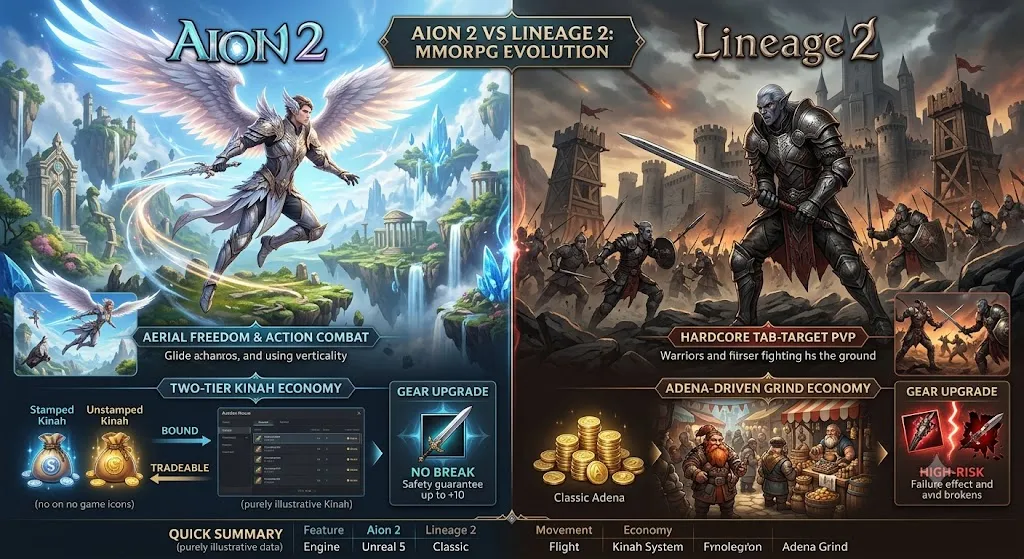
Lineage 2 is famous for its classic, slow-paced, tab-target combat system. It relies heavily on positioning, macro management, and a brutal progression grind.
Focus: Mass open-world PvP, castle sieges, and political clan wars.
Movement: Purely ground-based with limited verticality.
Aion 2: Action-Oriented and Aerial Freedom
Aion 2 updates the formula with a modern, fluid, action-based combat system utilizing dodges, real-time combos, and dynamic positioning.
Focus: Seamless vertical exploration and fast-paced spatial combat.
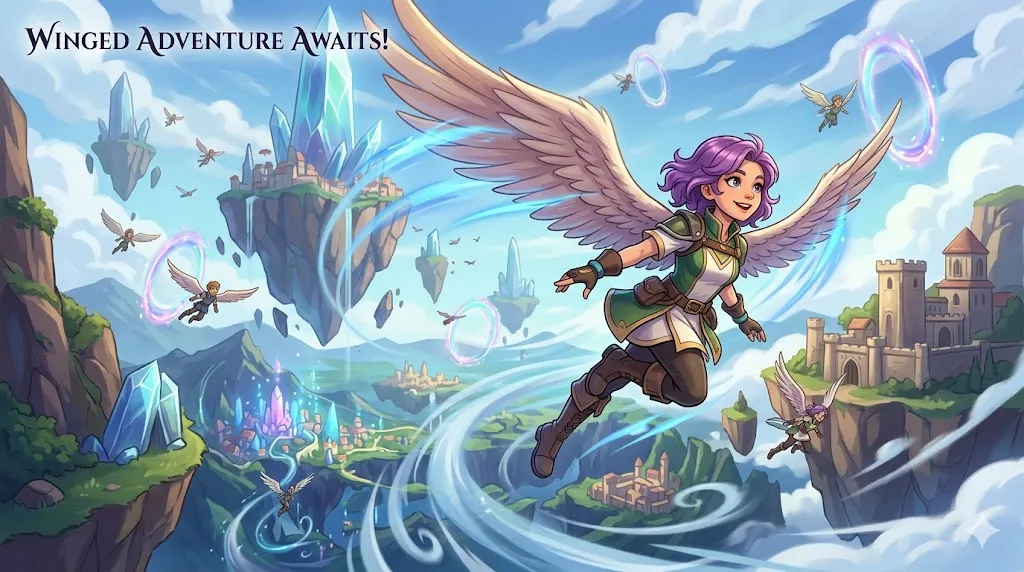
Movement: Massive aerial freedom. The game world is significantly larger than the original Aion, built from the ground up for 360-degree exploration using gliding and flying mechanics.
Visuals and Engine Technology
The technical gap between these two titles spans over two decades.
Lineage 2: Built on a heavily modified Unreal Engine 2. It holds a nostalgic, gritty charm but suffers from outdated animations, low polygon counts, and engine limitations during massive player gatherings.
Aion 2: Developed on Unreal Engine 5. It delivers high-fidelity lighting, highly detailed environments, and complex character models. Performance optimization allows for smooth large-scale realm-vs-realm (RvR) battles without the massive stuttering characteristic of older engines.
Economy vs. Progression
The financial design and market structure of these two games represent a major shift in how NCSoft handles player progression and in-game currency circulation.
Lineage 2 Economy: Adena and the Classic Market
Lineage 2 relies on Adena as its primary lifeblood currency.
The System: The economy is heavily player-driven, dependent on raw Adena drops, material gathering, and dedicated Dwarf classes who specialize in crafting top-tier gear.
The Reality: Over its long lifespan, massive inflation and heavy botting fractured the value of Adena. Today, progression is highly tied to premium cash shops, where players utilize real-money transactions to bypass months of brutal gear grinding and high-risk upgrade mechanics.
Aion 2 Economy: The Two-Tier Kinah System
Aion 2 brings back the franchise's iconic currency, Kinah, but completely restructures how it functions to combat bots, gold sellers, and inflation. Instead of a single open pool, the economy relies on a strict distinction between tradeable and bound currency:
Stamped Kinah (Character-Bound): This is the basic currency earned through standard daily gameplay, main story quests, and defeating regular monsters. It is strictly character-bound and can only be used for personal progression, such as buying consumables, paying NPC fees, crafting costs, and upgrading equipment.
Unstamped Kinah (Tradeable): This is the premium, fluid version of the currency used exclusively for player-to-player commerce. It is the only currency accepted on the Auction House / Marketplace for buying rare drops, high-end gear, and valuable player-crafted items.
Gear Upgrades: Kinah is heavily consumed by the gear enhancement system. To protect player investment, upgrading gear up to +10 has a 100% success rate. Beyond that level, failing an upgrade will never break or destroy your item—extracting it simply returns enhancement stones to your inventory.
Monetization Fairplay: Rather than driving progression through premium cash-shop currencies, Aion 2 utilizes a flat $15 monthly subscription model for premium benefits, alongside a cosmetic wardrobe, skin store, and seasonal battle passes.
Currency & Market Comparison
Feature
Lineage 2
Aion 2
Primary Currency
Adena
Kinah
Market Control
Single open currency; highly susceptible to inflation and bot farming.
Two-tier system (Stamped vs. Unstamped) to isolate bot impacts from player trading.
Auction House Use
Open trading with Adena, often bypassed by real-money shops.
Strictly traded via Unstamped Kinah; trading post uses in-game currency over premium cash.
Gear Sink Impact
High risk; failing upgrades destroys items, vaporizing your Adena investment.
Safe progression; safety cap to +10, zero item destruction on failure.
Summary
Choose Lineage 2 if you want a hardcore, nostalgic, slow-burn MMO where political alliances, massive clan rivalries, and old-school tab-target grinds dictate the server hierarchy.
Choose Aion 2 if you prefer modern action combat, vertical exploration through flight, a fairer gear upgrade system, and updated Unreal Engine 5 visuals.