
购物车空
继续购物Warrior remains one of the most versatile melee classes in World of Warcraft: Forever, combining heavy weapon damage, Rage management, and flexible combat roles. Whether you prefer crushing enemies with a two-handed weapon, dealing sustained damage with dual-wield attacks, or protecting your group as a tank, choosing the right specialization makes a noticeable difference. Our team recommends starting with Arms for solo leveling, then considering Fury or Protection as your gear and group requirements develop. Players planning their progression with WoW Forever Gold should also understand how weapon upgrades and training costs affect their overall leveling experience.
Unlike a traditional Classic Warrior guide, WoW Forever introduces several class adjustments that change how the class performs in combat. Rage generation has been reworked, Victory Rush provides additional sustain, and the three talent trees have received new options. These changes make weapon selection, talent synergy, and stance management especially important. In this guide, we'll break down the best Warrior builds, essential abilities, talent choices, and gear priorities to help you develop a more effective character from early leveling to endgame PvE.
Warrior is a strong choice for players who enjoy direct melee combat and want a class capable of filling multiple group roles. Its three specializations offer different approaches to combat, but they all revolve around generating and spending Rage efficiently.
One of Warrior's biggest strengths is its flexibility. Arms focuses on two-handed weapon damage, Fury emphasizes aggressive dual-wield combat, and Protection provides the defensive tools needed for dungeon tanking. This allows players to adapt their characters to different PvE situations without abandoning the class.
However, Warrior requires more attention to equipment and combat resources than some other classes. A weak weapon can noticeably reduce your damage, while poor Rage management can interrupt your ability rotation. We recommend treating weapon upgrades as a major part of character progression rather than focusing exclusively on armor ratings.
| Strengths | Weaknesses |
|---|---|
| Strong physical damage | Depends heavily on weapon quality |
| Three distinct combat specializations | Requires careful Rage management |
| Effective dungeon tanking | Limited ranged combat options |
| Useful group buffs and debuffs | Can struggle with consecutive solo pulls |
| Flexible stance-based gameplay | Equipment upgrades can be expensive |
For beginners, Warrior offers a rewarding progression experience once its resource system becomes familiar. Learning when to attack, switch stances, and conserve Rage is often more important than simply using every available ability as soon as it becomes available.

Choosing the right specialization is one of the most important decisions when developing a Warrior. Although all three talent trees have practical uses, their strengths become more apparent when you consider weapon requirements, Rage consumption, and your preferred combat role.
Arms is our recommended starting point for players who primarily complete quests and fight enemies alone. Its two-handed weapon approach delivers strong individual attacks without requiring the same dual-wield equipment considerations as Fury.
Mortal Strike serves as a major damage ability, while Overpower rewards players who react to enemy dodges. Rend also becomes more useful through its Attack Power scaling, allowing physical damage investment to contribute to its effectiveness.
For leveling, we recommend focusing on:
Arms is particularly comfortable for players who prefer controlled engagements rather than relying on a high-frequency attack sequence.
Fury offers a more aggressive playstyle built around frequent attacks and sustained melee pressure. Instead of relying on a single powerful weapon, Fury uses two weapons to maintain consistent damage output.
Bloodthirst and Whirlwind form important parts of its offensive toolkit, while Flurry improves attack speed after critical strikes. Its revised talent options also provide additional ways to improve Rage efficiency and dual-wield performance.
Fury is worth considering when you have access to suitable weapons and want a more aggressive damage-focused build.
Protection is designed for players who want to control enemy aggression and protect their party. A one-handed weapon and shield provide the foundation for this specialization, while defensive abilities help maintain survivability and threat.
Important abilities include:
Protection is not necessarily the fastest choice for solo leveling, but it becomes valuable when dungeon groups need a reliable tank.
| Specialization | Main Weapon Setup | Best Use |
|---|---|---|
| Arms | Two-handed weapon | Solo leveling and melee DPS |
| Fury | Dual-wield weapons | Sustained PvE damage |
| Protection | One-handed weapon and shield | Dungeon tanking |
Our recommendation is straightforward: start with Arms if you're new to Warrior, explore Fury when you have better dual-wield equipment, and develop Protection when you want to take on a dedicated tanking role.
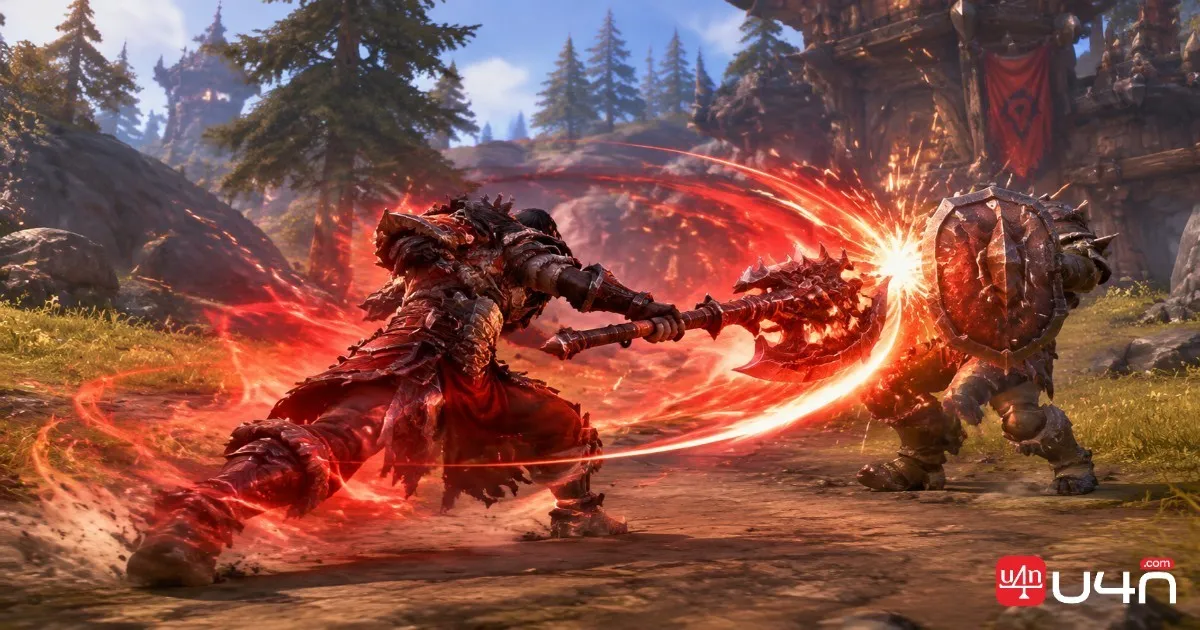
Understanding Warrior abilities is only half the battle. The real challenge is managing Rage so that important attacks remain available when you need them.
Unlike mana-based classes, Warriors generate their primary resource through combat. This means your available abilities depend on your current situation, weapon performance, and incoming damage.
| Ability | Main Function | Practical Use |
|---|---|---|
| Charge | Initiates combat and generates Rage | Opening engagements |
| Heroic Strike | Enhances the next main-hand attack | Spending excess Rage |
| Rend | Applies damage over time | Longer encounters |
| Overpower | Punishes enemy dodges | Arms damage |
| Mortal Strike | Powerful weapon attack | Arms single-target damage |
| Whirlwind | Attacks nearby enemies | Multi-target combat |
| Bloodthirst | Attack based on Attack Power | Fury damage |
| Victory Rush | Deals damage and restores health | Sustaining solo leveling |
| Shield Slam | Shield-based offensive ability | Protection tanking |
| Revenge | Defensive attack | Tanking and threat generation |
Not every ability needs to be used in every encounter. We recommend learning the purpose of each skill before building a fixed rotation around it.

Rage management is particularly important in WoW Forever because the system has received several adjustments.
Weapon speed now plays a role in normal Rage generation from outgoing attacks, while critical strikes provide additional Rage. Rage gained from incoming damage also follows adjusted rules that prevent armor and damage absorption from reducing it in the same way as the traditional system.
This creates a more interesting relationship between offensive stats and resource generation. Critical strikes are not simply a way to increase damage; they can also help you maintain a more consistent supply of Rage.
Rage management is one of the defining elements of Warrior gameplay in WoW Forever. Understanding when to generate, preserve, and spend Rage is just as important as selecting the right abilities or equipment.
Blizzard explains these adjustments in its official Warrior class overview, including normalized Rage generation, additional Rage from critical strikes, and changes to baseline abilities.
A common beginner mistake is using Heroic Strike whenever Rage becomes available. We recommend being more selective. Spending too much Rage on one attack can leave you without enough resources for a more important ability during the next few seconds.
Warrior talents should support your preferred combat role rather than simply maximize one damage statistic. Arms, Fury, and Protection each offer different ways to improve damage, Rage efficiency, and survivability.
One important difference in WoW Forever is that the talent trees have received new milestone talents and adjustments to existing abilities. We recommend paying attention to these changes before copying a traditional Classic talent build.
Arms is a practical starting point for solo progression because its talents support two-handed weapon combat and improve several important attack opportunities.
Prioritize talents that strengthen:
Our team recommends building around reliable weapon damage and Rage efficiency before investing heavily in situational talents.
Fury focuses on attack frequency, critical strikes, and dual-wield performance. Its revised talent tree provides additional options for players who want to maintain pressure throughout longer encounters.
Important talents include:
The relationship between critical strikes and Flurry makes Fury particularly interesting. However, we would not recommend switching to dual-wielding simply because the talent tree looks attractive. Your weapons and overall equipment need to support the build.
Protection talents should improve your ability to survive incoming attacks while maintaining consistent threat.
Consider prioritizing:
Protection benefits from a balanced approach. Investing entirely in damage without considering defensive requirements can make dungeon encounters unnecessarily difficult.
Your initial leveling build does not have to become your permanent endgame setup. As you gain levels, collect better equipment, and begin running more dungeons, your preferred role may change.
WoW Forever also introduces Dual Specialization at level 40, giving players more flexibility when switching between different combat roles. For example, maintaining an Arms build for solo quests and a Protection build for group content can make progression more convenient.
Blizzard's official Warrior overview also confirms the revised Rage rules, baseline Tactical Mastery and Victory Rush, and new milestone talents across the three specializations. Since the class remains subject to Beta adjustments, check the current talent trainer before committing to a final build.
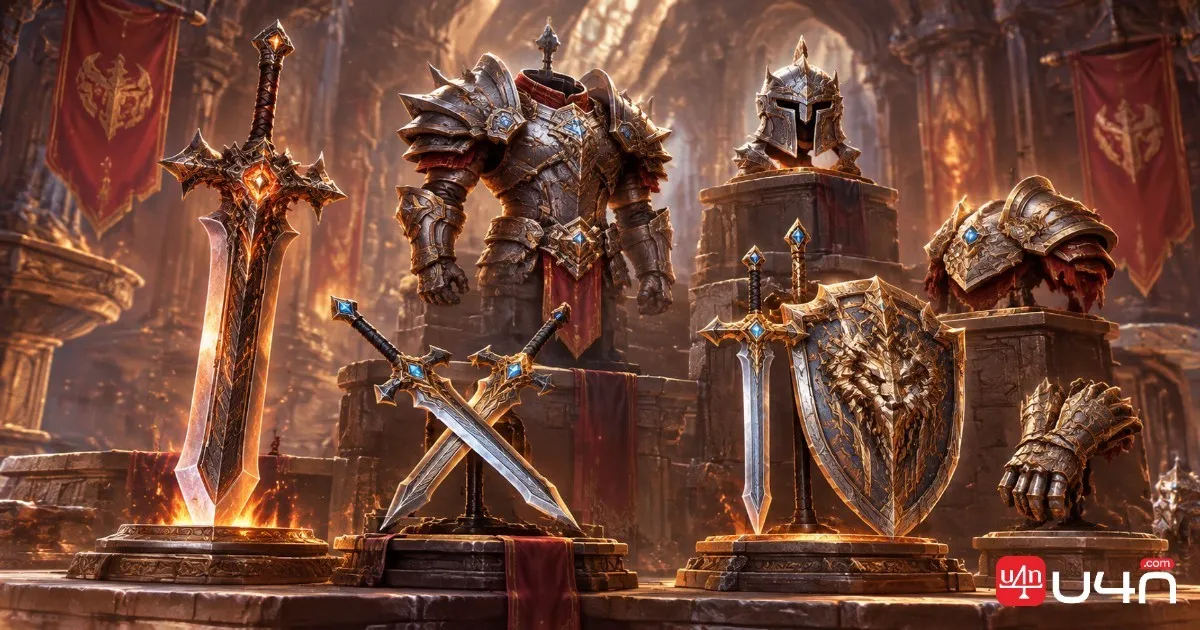
Warrior is one of the classes where equipment upgrades can dramatically change the overall combat experience. A stronger weapon improves your offensive potential, while the right secondary attributes help your character perform more consistently.
For this reason, we recommend evaluating equipment according to your specialization instead of automatically equipping every item with a higher item level.
| Specialization | Recommended Equipment | What to Prioritize |
|---|---|---|
| Arms | Two-handed sword, axe, or mace | Weapon damage and useful offensive stats |
| Fury | Two one-handed weapons | Damage, attack speed, and hit reliability |
| Protection | One-handed weapon and shield | Defensive value, threat, and survivability |
For Arms, weapon damage should be one of your main considerations. A substantial weapon upgrade can improve your overall performance more than replacing several smaller armor pieces.
Fury requires more careful equipment planning because both weapons contribute to its damage output. Pay attention to off-hand performance and hit reliability rather than looking exclusively at the main-hand weapon.
Protection has a different priority. Your shield, defensive statistics, and ability to generate threat consistently are all important when tanking stronger enemies.
Different specializations benefit from different attributes, but the following table provides a useful starting point.
| Stat | Benefit | Main Priority |
|---|---|---|
| Strength | Improves melee offensive power | All specializations |
| Attack Power | Increases physical damage | Arms and Fury |
| Critical Strike | Improves damage and Rage generation | Especially valuable for Fury |
| Hit | Improves attack reliability | Particularly important for Fury |
| Stamina | Increases maximum health | Especially important for Protection |
| Defense | Supports tank survivability | Protection |
We recommend treating this as a general gearing framework rather than a rigid ranking. Actual stat values depend on your level, weapon setup, existing equipment, and intended content.
The most efficient approach is to prioritize upgrades that solve your current combat problems.
Players looking to plan their equipment progression can also use WoW Forever Items as a reference when researching useful weapons, armor, and other character upgrades.
Once you approach the endgame, your equipment choices should become more specialized. Arms and Fury players generally focus on improving physical damage and attack consistency, while Protection Warriors need a more balanced combination of defensive attributes and threat generation.
We recommend building separate equipment sets when possible, especially if you regularly switch between DPS and tanking. This avoids the common problem of entering a dungeon with damage-focused equipment that does not adequately support your tanking responsibilities.
Knowing which talents and equipment to choose is important, but good combat decisions are what make a Warrior consistently effective.
Our team has identified several habits worth developing early, particularly for players who are new to Rage-based classes.
Rage is not a resource that should always be spent immediately. When an enemy is close to defeat, consider whether saving some Rage will help you start the next encounter more efficiently.
This becomes particularly useful when using Fury talents that delay Rage decay after combat.
Warriors have multiple stances, each suited to different situations. Battle Stance supports general offensive combat, Defensive Stance is essential for tanking, and Berserker Stance provides additional offensive utility.
Avoid switching stances unnecessarily. Even with Tactical Mastery, you should consider how much Rage will remain after the transition.
Victory Rush is particularly valuable when completing quests and fighting consecutive enemies. Its ability to restore health after eligible kills helps reduce downtime between encounters.
Instead of treating it as an occasional bonus, we recommend incorporating it into your normal leveling routine.
| Mistake | Better Approach |
|---|---|
| Ignoring weapon upgrades | Prioritize meaningful weapon improvements |
| Spamming Heroic Strike | Save Rage for higher-priority abilities |
| Switching stances randomly | Change stances according to combat needs |
| Using one build for everything | Adapt talents to your preferred role |
| Ignoring defensive equipment | Prepare appropriate gear for tanking |
| Overlooking Victory Rush | Use its recovery effect during leveling |
The biggest improvement for most new Warriors does not come from finding a complicated rotation. It comes from understanding when to spend Rage, when to preserve it, and how to use the right ability for the current encounter.
Warrior offers three distinct playstyles in WoW Forever, making it a flexible choice for players who enjoy melee combat and active resource management. Arms is our recommended starting point for solo leveling, Fury provides an aggressive dual-wield approach, and Protection remains the natural choice for dungeon tanking.
The most important part of developing your character is understanding how skills, talents, and equipment work together. A strong build should improve your combat efficiency without creating unnecessary Rage problems or sacrificing the survivability required for your chosen role.
Our final recommendations are:
Ultimately, a well-developed Warrior is not simply a character with strong equipment. It is a character that can manage Rage, select the right stance, and adapt to different encounters. Mastering these fundamentals will make your progression smoother and your contribution to group content more reliable.
Arms is our recommended starting point for most solo players because its two-handed weapon playstyle is straightforward and does not require two strong weapons. Fury becomes more attractive when you have suitable dual-wield equipment and want sustained melee damage.
It depends on your role. Arms and Fury are damage-focused options, while Protection is designed for tanking. For dungeon groups, Protection is the natural choice when you want to control enemies and protect your party.
Strength and Attack Power are important offensive attributes. Critical Strike and Hit are valuable for damage consistency, particularly for Fury. Protection Warriors should also pay attention to Stamina and Defense.
Warriors generate Rage through dealing and receiving damage. Weapon speed influences Rage generation from attacks, while critical strikes provide additional Rage. Managing this resource effectively is essential for maintaining a consistent combat rhythm.
Dual Specialization becomes available at level 40, allowing Warriors to maintain two different talent configurations. This is particularly useful for players who want separate builds for solo leveling and dungeon tanking.