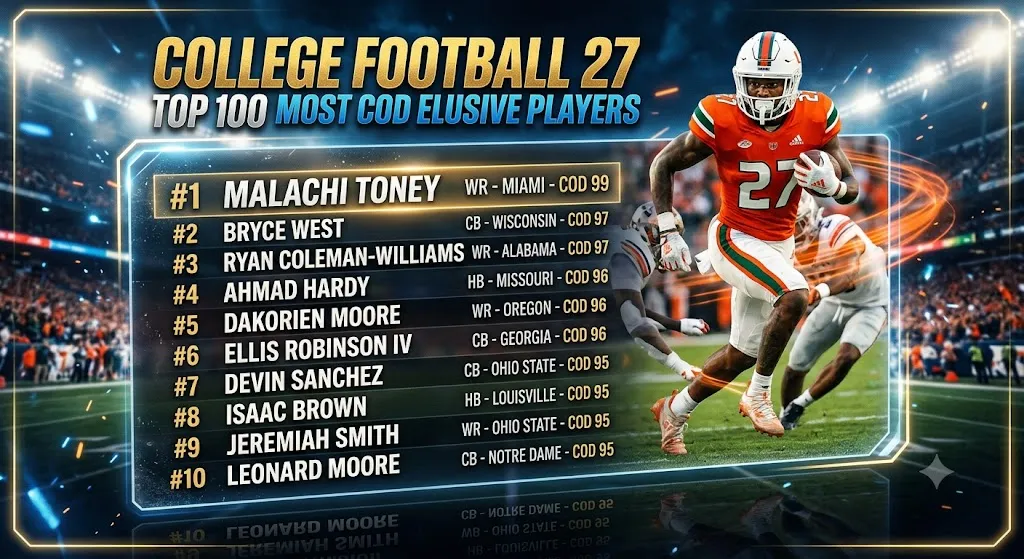
The launch of EA Sports College Football 27 and Madden NFL 27 highlights two distinct approaches to football gaming. While both games share core engine technology, they target completely different aspects of the sport. College Football emphasizes roster volatility, custom traditions, and high-energy atmosphere, whereas Madden focuses on refined pro-level gameplay, contract negotiations, and player personalities.
Here is a direct comparison to help you decide which gridiron simulation deserves your time and money.
At a Glance: Key Differences
Feature
College Football 27
Madden NFL 27
Release Date
July 9, 2026 (Early Access July 2)
August 13, 2026 (Early Access August 6)
Cover Athlete(s)
Kewan Lacy, Malachi Toney, Dante Moore
Caleb Williams
Core Theme
Pageantry, tradition, and chaotic recruiting
Professional execution and player branding
Flagship Mode
Dynasty (138 playable programs)
Franchise Mode
Key Innovation
Dynasty Blueprint (NIL & Transfer Portal)
Persona Engine (AI Player Personalities)
PC Release
Yes (Steam, Epic, EA App)
Yes (Steam, Epic, EA App)
Gameplay: Chaos vs. Precision
The fundamental difference on the field comes down to the style of football being played.
College Football 27: High-Octane Speed
College Football 27 leans into the wide-open, unpredictable nature of Saturdays.
Playbooks: Massive variety, including deep options for the Triple Option, RPO (Run-Pass Option), and unique spread offenses.
Player Attributes: Wider skill gaps between elite 5-star athletes and lower-tier starters, leading to more explosive plays and sudden defensive breakdowns.
Atmosphere: Over 120 playable mascots, school-specific crowd patterns (like Stripe Outs), and dynamic regional weather patterns that directly affect ball handling.
Madden NFL 27: Surgical Execution
Madden 27 reflects the parity and chess-match nature of the Sunday pro game.
Mechanics: Focuses on refined mechanics like precise wide receiver vs. defensive back physical battles and updated short-yardage pushing animations.
Defensive Depth: Enhanced pre-play adjustment tools and smarter zone coverage logic designed to stop competitive meta-strategies.
Consistency: True to the NFL, players behave with much higher discipline, making fewer unforced errors but requiring strict execution from the user.
Deep Dive: Dynasty vs. Franchise
The longevity of both titles rests on their primary multi-season management modes.
College Football 27: The Dynasty Blueprint
Managing a college program requires balancing constant roster turnover due to graduation, the transfer portal, and Name, Image, and Likeness (NIL) demands.
Dynasty Points: A new resource management system used to upgrade campus facilities, retain elite assistant coaches, and bid on high-profile recruits.
Recruiting Stages: Features a deeper pipeline involving Verbal Commitments and late-season "Recruit Flipping."
Storytelling Engine: Generates dynamic weekly blog posts and media coverage tailored specifically to your team's current narrative.
Madden NFL 27: The Persona Engine
Madden 27 focuses on managing professional egos, salary caps, and long-term franchise stability.
Persona Engine: An AI framework where every NFL player reacts based on a distinct personality type. Their traits influence contract demands, team chemistry, and trade requests.
Superstar Mode: Features an expanded "G.O.A.T. Career Journey" with deeper player progression paths and off-field branding decisions.
Contract Management: Complex salary structures, including restructuring options, fifth-year options, and franchise tag strategies.
Economy and Coins: In-Game Marketplaces
While both games utilize standard EA Points for direct shop purchases, the primary engine of their respective Ultimate Team economies relies on non-transferable, earnable Coins. Both marketplaces use a unified web and companion app auction house structure, but the practical purchasing power of coins differs significantly between the two titles.
College Football 27 Coins (CUT)
The CUT market relies on volume and rapid player turnover.
Earning Mechanics: CFB 27 Coins are heavily tied to the new "Study Hall" single-player challenge system, which rewards high-performance weekly gameplay with large coin payouts.
Market Characteristics: Because college rosters features thousands of athletes across 138 schools, mid-tier player items are incredibly cheap. However, premium "Campus Legend" items command astronomical coin values due to their limited nature.
Investment Value: Standard cards hold value poorly as fresh seasonal events rapidly shift the meta. Coins are best spent building specific team chemistries rather than hoarding single high-value cards.
Madden 27 Coins (MUT)
The Madden 27 Coins operate like a mature fantasy sports stock market, highly dependent on real-world professional player performances.
Earning Mechanics: Earned primarily through head-to-head competitive divisions, seasonal Field Passes, and Solo Battles.
Market Characteristics: The professional market is highly stable. High-tier items retain value much longer because the player pool is vastly smaller than the college ranks. "Quicksell" item values act as a hard floor for minimum coin prices.
Investment Value: Savvy players can easily play the auction house by tracking weekly real-world NFL games, buying underperforming cards early and selling them immediately after a dominant Sunday performance upgrades their stats.
Presentation and Features
Customization
College Football 27 takes a major leap forward with an updated Team Builder suite. Players can design custom stadiums from the ground up, adjusting everything from end-zone structures and jumbotrons to custom crowd soundscapes. Madden 27 offers a cleaner, broadcast-ready presentation modeled after prime-time NFL television spots.
Ultimate Team Progression
Both games feature a shared approach to Ultimate Team item upgrades, utilizing Evos and specific skill points to bypass traditional random card packs. However, College Football introduces unique campus legends, while Madden centers its live content around weekly NFL performance updates and seasonal Field Passes.
Which One to Choose?
Choose College Football 27 if: You prefer fast-paced gameplay, building low-tier programs into powerhouses, and navigating the chaotic waters of modern college recruiting and the Transfer Portal.
Choose Madden NFL 27 if: You want a deeply strategic football experience, love managing a professional salary cap, and want to experience the new personality-driven locker room dynamics of the NFL.