购物车空
继续购物College Football 27 builds directly on the foundation of College Football 26, but significantly expands Dynasty Mode into a deeper program-management simulation. The focus shifts from simple team building to full organizational control across budgets, expectations, NIL, staffing, and long-term strategy.
| System Area | College Football 26 | College Football 27 (Changes) |
|---|---|---|
| Dynasty Structure | Foundation-level Dynasty systems focused on coaching, recruiting, and progression | Expanded “program builder” vision with Dynasty Blueprint, AD Expectations, NIL economy, and resource allocation |
| Program Management | Limited budget influence and simplified team building | Full Dynasty Points economy managing staff, facilities, NIL, and upgrades |
| Athletic Director Expectations | Basic job performance goals | Deep multi-layer expectations (demeanor, priorities, 3 active goals, job security impact) |
| School Identity | General program ratings | Dynamic school personality: patience level, priorities, and evolving expectations over time |
| NIL System | Simple recruiting influence layer | Full dual system: Recruiting NIL + Roster NIL with ongoing financial commitments |
| Recruiting | Traditional pipeline + interest + stages | New flow: Open → Top 5 → Top 3 → Verbal Commit → Hard Commit + recruit flipping system |
| Coaching Carousel | Offer-based job system | Interest-based system with risk, coach prestige, stability cost, and no guaranteed offers |
| Staff Management | Coordinators only | Full coaching ecosystem: coordinators + support staff + hiring costs + retention mechanics |
| Facilities | Upgrade-based improvements | Tiered facility system (F to A+ range caps) + equipment system + maintenance cost tradeoffs |
| Budget System | Static or limited progression economy | Annual Dynasty Points economy tied to performance, prestige, facilities, NIL, and expectations |
| Coach Progression | Linear skill tree | Archetype-driven progression + new Visionary and Rainmaker archetypes |
| Game Preparation | Limited weekly control | Weekly Practice Plans with XP, wear & tear, injury risk, and hot/cold effects |
| Weather System | Static weather conditions | Dynamic Weather that changes mid-game (rain, snow, fog, storms shifting in real time) |
| Presentation & World | Standard Dynasty immersion | Expanded college football ecosystem including history tracking, season archives, and evolving world context |
The most important change is philosophical: you are no longer just building a roster—you are managing an entire athletic program. Every decision ties back to long-term sustainability, expectations, and resource allocation.
Everything now flows through a single strategic resource system. Staff, NIL, facilities, and upgrades all compete for the same budget, forcing real tradeoffs between short-term success and long-term growth.
NIL is no longer optional flavor. It directly impacts recruiting battles, roster retention, transfer portal strategy, and even player expectations over time.
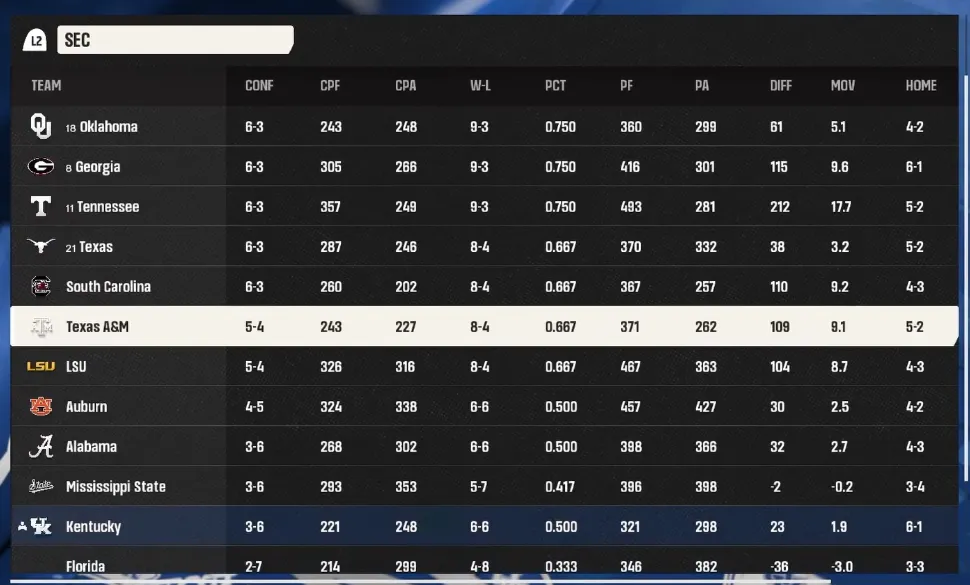
Schools now behave differently depending on patience, goals, and internal pressure. A 9–3 season can be elite at one school and unacceptable at another.
Verbal commitments are no longer secure. Recruiting now includes flipping, influence bonuses, and late-cycle competition that continues until signing day.
| System Area | College Football 26 | College Football 27 (Changes) |
|---|---|---|
| In-Game Currency | Limited impact currency mainly tied to Ultimate Team progression and basic rewards | Expanded multi-layer economy where Dynasty Points function as the core “program currency” influencing almost every system |
| Coin Usage | Mostly used for team upgrades, packs, or mode-specific purchases | Coins/points now directly affect coaching staff hiring, NIL deals, facilities upgrades, and recruiting battles |
| Earning Methods | Primarily gameplay-based grinding (challenges, matches, rewards) | Broader income sources including AD Expectations rewards, program performance bonuses, prestige growth, and season achievements |
| Spending Pressure | Mostly optional or mode-specific spending | Constant strategic pressure due to shared budget across NIL, staff, and facilities |
| Economy Depth | Simple progression loop | Fully integrated economy tied to Dynasty Blueprint decisions and long-term program strategy |
In College Football 27, the in-game economy has evolved into a fully integrated system where Dynasty Points influence nearly every aspect of program building, including NIL, coaching staff, facilities, and recruiting battles. Compared to College Football 26, the economy is no longer a simple reward loop but a strategic resource system driven by AD Expectations, program performance, and long-term team development. Players looking to progress faster and stay competitive can explore options like buy cheap College Football 27 coins from trusted platforms to support their Dynasty build and resource management.
College Football 27 transforms Dynasty Mode from a roster management experience into a full program simulation. Compared to College Football 26, the biggest upgrades come from:
Overall, it is less about building a good team—and more about running a college football empire.